Forest Breathwork for Deep Sleep: The Nature-Based Protocol
Discover how ancient forest breathing techniques combined with outdoor sleep practices can dramatically improve sleep quality, reduce insomnia, and reset your circadian rhythm naturally.
Your Bedroom Cannot Compete With a Forest Floor
You have tried everything. Blackout curtains, white noise machines, magnesium supplements, sleep tracking rings, eight different meditation apps. Your sleep score still looks like a stock market crash. The problem is not your mattress or your supplement stack. The problem is that your nervous system does not trust your environment. Your body knows, on a cellular level, that the bedroom you sleep in is a sealed box disconnected from every signal that shaped human sleep architecture for two million years. Trees. Soil. Night air. The sound of water moving over rocks. Your biology is waiting for the forest, and you keep giving it polyester sheets and LED blackout shades.
Forest breathwork is not visualization exercises in a studio. It is not box breathing you learned from a podcast while sitting on a couch. Forest breathwork is the deliberate practice of combining respiratory techniques with the sensory environment of a living forest to reprogram your autonomic nervous system for deep, restorative sleep. When you practice this protocol correctly, your body does not just feel tired. Your body feels safe. Those are not the same thing, and the difference is why you keep waking up at 3am with your mind racing.
The forest is not a spa. The forest is a biological signal generator operating at a frequency your nervous system has never stopped listening to, even if you have stopped hearing it. When you bring intentional breathwork into that environment, you are not adding wellness to your routine. You are unlocking the protocol that your body was designed to run.
Why Forests Are the Original Sleep Medicine
Human sleep did not evolve in bedrooms. Human sleep evolved under canopy cover, surrounded by the biochemical exhalations of thousands of living trees, cooled by forest floor temperatures that drop ten to fifteen degrees below open meadow readings, and regulated by the specific light spectrum that filters through chlorophyll. Every night for the entirety of human existence, our ancestors breathed air shaped by the forest, and that air carried signals that told their bodies it was safe to enter parasympathetic dominance.
The trees around you are not passive. They emit volatile organic compounds called phytoncides, which are essentially the antimicrobial defense signals that trees release into the air to communicate with each other and protect themselves from pathogens. When you breathe these compounds, your body responds with measurable increases in natural killer cell activity, reductions in cortisol production, and drops in resting heart rate. Research in environmental physiology consistently shows that time in forest environments reduces markers of sympathetic arousal within twenty minutes of exposure. Your body recognizes the chemistry of the forest the way your immune system recognizes breast milk. This is not metaphor. This is biochemistry.
The acoustic environment of the forest is equally critical. The sounds that trees make, the way wind moves through branches at different densities, the calls of birds that have evolved to communicate specific frequencies, the splash and flow of water moving over irregular terrain. These sounds operate in frequency ranges that actively entrain your brainwave patterns toward theta and delta states associated with the transition into deep sleep. White noise machines are a crude approximation. The forest is the original source material.
Temperature matters here as well. Forest environments maintain thermal mass that moderates temperature swings. The canopy traps cooler air at ground level while releasing warm air upward. Soil has a specific heat capacity that moderates ground temperature independently of air temperature. When you lie down in a forest environment in the evening, your body encounters a temperature gradient that begins the process ofcore temperature reduction that triggers melatonin release. Your bedroom, with its insulation and climate control, interrupts this signal. The forest delivers it for free.
The Autonomic Breathwork Foundation
Before you enter the forest for sleep optimization, you need to understand the breathwork itself. Forest breathwork is not a single technique. It is a layered protocol that addresses different branches of your autonomic nervous system through specific respiratory patterns, each targeting a different mechanism of sleep architecture.
The foundation is extended exhalation. This is the single most important respiratory adjustment you can make for sleep, and it is absurdly simple. Most people breathe at a ratio of approximately one to one, inhaling for four seconds and exhaling for four seconds. This pattern maintains sympathetic tone. It keeps your heart rate elevated and your cortisol output active. The forest breathwork protocol requires you to extend your exhale to one and a half to two times the length of your inhale. If you inhale for four seconds, you exhale for six to eight seconds. You do this by actively engaging your lower diaphragm on the exhale, drawing the breath down into your belly before releasing it slowly through pursed lips or lightly clenched teeth.
This extended exhale pattern activates the vagus nerve, which runs from your brainstem through your neck, chest, and abdomen, innervating every organ system in your body. The vagus nerve is the primary channel of parasympathetic activation. When you exhale slowly and fully, you mechanically stimulate the vagus nerve through pressure changes in your thoracic cavity. Your heart rate drops. Your cortisol production decreases. Your pupils constrict. Your digestion activates. Every system that should be running during restorative sleep begins to come online.
The second layer is coherence breathing, sometimes called resonant breathing. This is the practice of breathing at approximately five to six breaths per minute, which is the resonant frequency of your cardiovascular system. At this rate, your heart rate variability reaches its maximum amplitude, meaning the variation between each heartbeat is optimized. This is not a relaxed feeling. This is measurable physiological optimization. Your heart rate variability score, which most sleep trackers treat as a proxy for autonomic nervous system health, improves directly through coherence breathing practice.
To practice coherence breathing, inhale for five seconds and exhale for five seconds, maintaining the extended exhale pattern. This gives you six breaths per minute. Over time, your body learns to maintain this rhythm even when you are not consciously counting. This is the goal. You are installing an autonomic habit that runs in the background of your nervous system.
The third layer is the pause, which most breathwork protocols ignore entirely. After you complete a full exhale, you hold the empty breath for two to four seconds before initiating the next inhale. This pause, called a post-expiratory hold, further stimulates vagal tone and creates a specific physiological state where your body experiences a brief period of mild hypoxic stress followed by a rush of oxygen on the subsequent inhale. This oscillation between slightly reduced and fully oxygenated blood is one of the most powerful regulators of sleep onset latency. Your body wants to enter sleep when it experiences this pattern in an environment that it recognizes as safe. The forest provides the environment. The breathwork provides the pattern.
The Evening Forest Protocol for Sleep
The protocol begins two hours before your target sleep time. Not thirty minutes. Two hours. Sleep onset is not a light switch. It is a biological cascade that requires time to initiate, and every signal you send to your body during those two hours either accelerates or blocks the cascade. The forest protocol takes the first ninety minutes of that window.
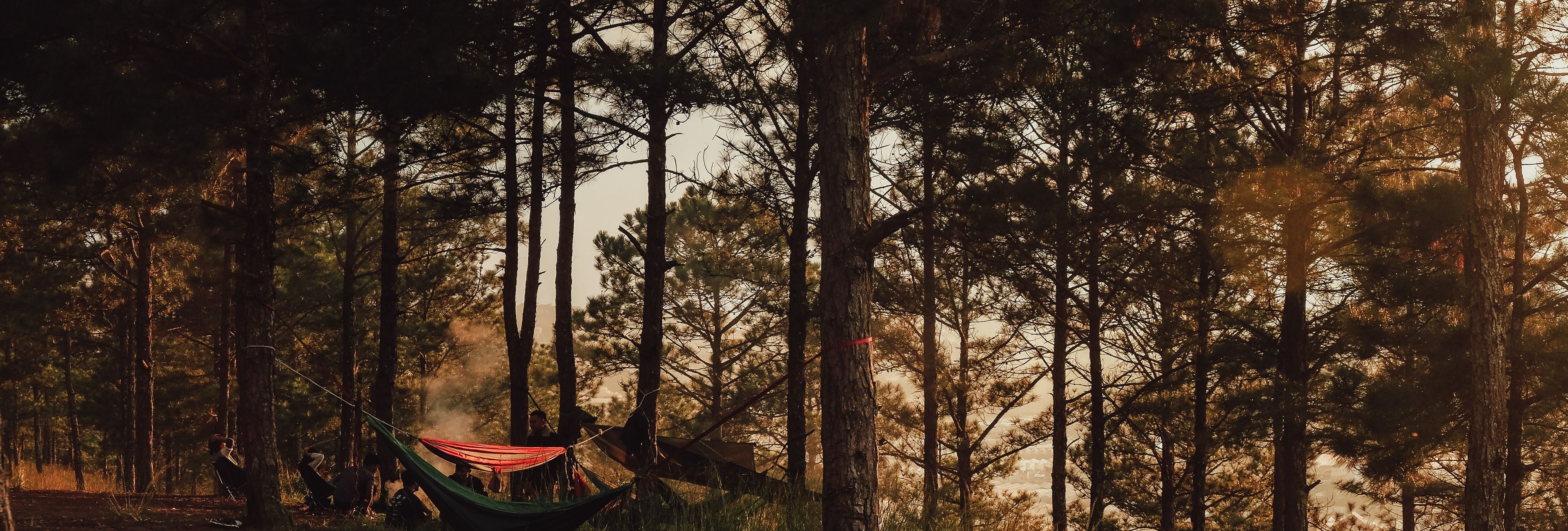
Arrive at your chosen forest location thirty minutes before sunset if possible, or as close to dusk as your schedule allows. The transition from day to night in a forest environment is a light show that your circadian system was built to interpret. The canopy filters the setting sun into amber and red wavelengths that your retinal ganglion cells read as a direct signal to begin melatonin production. You cannot replicate this in your living room. A light therapy lamp in your kitchen at 6pm is not the same as standing in a forest as the sun drops below the treeline. Your body knows the difference.
Begin with ten minutes of silent observation. Do not put in earbuds. Do not start the breathwork yet. Simply stand or sit in the forest and let your sensory systems calibrate to the environment. Watch the light change. Listen to the frequency layers of the soundscape. Feel the temperature gradient between the ground and the air. This observation period is not passive. Your amygdala is assessing threat levels. Your reticular activating system is cataloging the safety signals of the environment. Your vagal system is receiving the first biochemistries of the forest air. This baseline calibration is essential for everything that follows.
After ten minutes, begin the extended exhale breathwork while walking slowly through the forest. Do not walk fast. This is not exercise. This is a therapeutic intervention. Walk at a pace that allows you to maintain your breath count and does not elevate your heart rate above resting baseline. The movement itself provides lymphatic drainage and gentle muscular engagement that will contribute to physical tiredness, but the primary work is respiratory. Inhale for four seconds, pause for two seconds, exhale for seven seconds, pause for three seconds. Repeat this pattern for twenty minutes.
Find a log or a moss-covered boulder and sit for the second phase. Now you are practicing forest breathwork in stillness, which deepens the parasympathetic activation significantly. Maintain the same breath ratio but add the coherence breathing goal. Try to settle into a rhythm of five to six breaths per minute. If you lose the count, return to the four-seven pattern and let coherence develop naturally over five to ten minutes. Many practitioners find that after a few cycles of extended exhale breathing in a forest environment, their breath settles into coherence without conscious effort. This is the nervous system recognizing the safety signals and choosing rest.
Continue this practice for thirty to forty-five minutes. As darkness fully arrives, you should notice several changes. Your vision will have adjusted to low light, and your eyes will be producing melatonin in response to the darkness rather than artificial light. Your heart rate will be measurably lower than when you began. Your muscles will have released tension you did not know you were holding. Your mind, if you have been practicing correctly, will have grown quieter. The chatter that usually accompanies your evening will have diminished significantly.
The Transition: Walking Out of the Forest and Into Sleep
The walk back to your sleeping location is the most overlooked part of the protocol, and it is where most people lose their gains. You have spent the last ninety minutes lowering your cortisol, increasing your vagal tone, producing melatonin, and entering a pre-sleep neurological state. A twenty-minute walk back through a lit neighborhood, scrolling your phone to check the time or answering a notification, can reset your cortisol to baseline and delay sleep onset by hours.
Complete the walk in darkness if possible. Use a red light headlamp if you need illumination. Red light at night does not suppress melatonin production the way white and blue wavelengths do. Continue the breathwork during the walk. The forest may be behind you, but the breath pattern you installed there travels with you. Maintain the extended exhale. Continue counting. Do not look at your phone. The sleep you are walking toward right now is the most important sleep of your week, and nothing on your phone is worth more than that.
Enter your sleeping space quietly. Do not turn on overhead lights. If you need light, use a single candle or your red headlamp. Complete a final five minutes of seated breathwork before lying down. Lying down immediately after the protocol skips a critical transition phase. Sit with your spine upright, maintaining the breath pattern one last time, letting your body finish the calibration to the horizontal position. When you lie down, your nervous system should already be halfway to sleep.
If you wake during the night, do not reach for your phone. Return to the extended exhale pattern in your bed. Inhale for four, exhale for seven. Your body will recognize the pattern and follow it back down into the state you left. The forest protocol does not end when you leave the trees. The breathwork is portable. The environment primed you. The practice serves you.
Building the Long-Term Protocol
A single session of forest breathwork will produce results. Your first night after a proper ninety-minute protocol will likely be the deepest sleep you have experienced in months. But long-term optimization requires consistency, and the forest is not equally accessible to everyone. Urban readers can adapt this protocol with some compromises. A city park with mature trees still produces phytoncides, still filters light, still provides a superior sensory environment to a bedroom. The protocols scale to the environment.
Two to three sessions per week will produce cumulative benefits within four to six weeks. Your baseline heart rate variability will increase. Your sleep onset latency will decrease. The quality of your deep sleep stages will improve measurably on any tracker worth using. Over time, the extended exhale breathwork pattern will begin to activate automatically when you enter any low-light, quiet environment in the evening. Your nervous system will learn to associate specific environmental signals with the protocol, and the response will become reflexive.
The ultimate goal is not to depend on a specific location for sleep. The goal is to understand that your sleep architecture is not broken. Your sleep architecture is waiting for the conditions that activated it for the entirety of human evolution. The forest is the original sleep medicine. You now have the protocol to access it.