Nature Meditation: Outdoor Mindfulness Techniques for Mental Clarity (2026)
Discover how practicing mindfulness in nature reduces stress, enhances focus, and optimizes cognitive performance through proven outdoor meditation techniques.
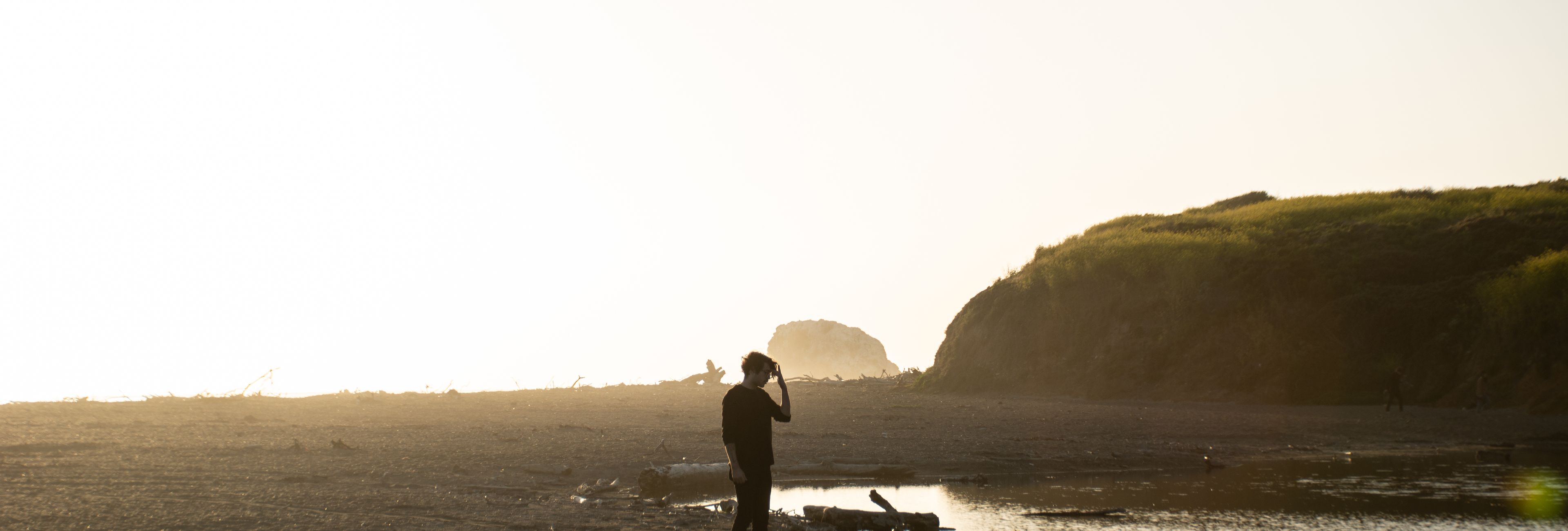
Nature Meditation Is the Upgrade Indoor Practice Never Was
You have been sitting in a room with your eyes closed, following your breath, trying to quiet your mind. Maybe you used an app. Maybe you followed a guided session. Maybe you sat on a meditation cushion that cost $120 and felt like an NPC checking off a wellness box. The results were marginal at best. Your mind still races. Your focus still fragments by noon. Your baseline stress level has not moved. Here is why: indoor meditation is training wheels. Nature meditation is the real protocol.
The distinction matters. When you close your eyes in a room, you are attempting to create a meditative state through sheer mental discipline. Your brain is fighting every stimulus it has been conditioned to respond to. The notifications, the ambient noise, the artificial lighting, the furniture that represents deadlines and obligations. You are asking your nervous system to enter a relaxed state while surrounded by cues that scream alertness. The practice works for some people. Most people are coping.
Nature meditation flips this completely. Instead of forcing your brain to override its environment, you let the environment do the regulation work. Trees do not send notifications. Water does not demand responses. Wind does not have an agenda. Your nervous system recognizes this. It has been calibrated over hundreds of thousands of years to find safety in natural settings. When you sit among trees or beside moving water, your parasympathetic system activates without you having to fight for it. This is not new age nonsense. This is evolutionary biology that indoor meditation apps cannot replicate.
Research on this continues to grow, but the pattern is consistent across studies: time in natural environments reduces cortisol, lowers heart rate variability markers of stress, and improves attention restoration. The Japanese have been studying this for decades under the term shinrin-yoku, or forest bathing. The protocols exist. They work. You have been ignoring them because someone told you meditation requires a quiet room and good posture and maybe some Tibetan singing bowls in the background.
It does not.
The Science of Why Natural Settings Supercharge Mindfulness
Your brain processes natural environments differently than built environments. This is not metaphor. It is measurable neuroscience. When you are in nature, different neural networks activate. The amygdala, your threat detection center, quiets down because there are no immediate survival demands. The prefrontal cortex, which handles focused attention and executive function, gets a break from the constant filtering it performs in urban and indoor settings.
In cities and buildings, your brain is in a constant state of scan mode. It is tracking potential threats, processing social signals, managing artificial stimuli, and maintaining vigilance against an environment that does not follow natural patterns. A car horn is not a tiger, but your nervous system treats it as an intrusion requiring response. A screen flicker demands attention even when you are not looking at it. The cumulative effect is a brain that never fully relaxes.
Nature operates on different wavelengths. Literally. Natural sounds like bird calls, wind through leaves, and water flowing exist in frequencies that research suggests promote alpha wave activity in the brain. Alpha waves correlate with relaxed alertness, the exact mental state meditation aims to cultivate. You cannot buy that frequency in a meditation app. You have to go outside and find it.
There is also the fractal pattern argument. Natural environments are full of fractals: branching trees, river deltas, cloud formations, leaf venation. Fractal patterns at specific ratios appear to regulate brain activity in ways that reduce stress markers. Artificial environments are largely linear and geometric. The difference in how your visual system processes these patterns is significant and measurable.
None of this means indoor meditation is worthless. It means outdoor mindfulness practices are more efficient at producing the desired neurological states. You get the benefits faster. You get them deeper. Your body already knows how to enter these states in nature because your body was designed to operate in nature. You are not teaching it something new. You are removing the obstacles that prevent it from doing what it already knows how to do.
The Basic Nature Meditation Protocol
Forget everything you learned in a studio meditation class. This protocol requires no cushion, no app, no subscription, no special equipment. It requires you to go outside and be present with the natural world.
Step one: choose your location. This matters more than most people realize. You want a spot where you can sit or stand comfortably for twenty to thirty minutes without being interrupted. It should have some visual complexity: trees, water, varied terrain, sky exposure. It should be quiet enough that human-made noise is not dominant, though complete silence is not required. A forest edge, a riverbank, a clearing in the woods, a hilltop with views. The specific setting is less important than the fact that it is natural and you feel reasonably safe there.
Step two: arrive and orient. Do not immediately sit down and close your eyes. Your body and mind need a transition period to shift out of whatever headspace you carried from indoors. Walk to your spot slowly. Take notice of how the environment changes as you approach. Feel the temperature shift. Notice the light quality. Listen to what is present before you add your practice to it.
Step three: establish your posture. Stand, sit on the ground, or sit on a rock or log. Do not lie down unless you are prepared to fall asleep. The posture should be upright enough that your breathing is not restricted, but relaxed enough that you are not holding tension. If you are on the ground, use a natural pad or blanket if the terrain is uncomfortable. Comfort matters. Discomfort is a distraction.
Step four: open your attention. Here is where indoor meditation teachers and nature meditation diverge. You are not trying to focus on nothing. You are not forcing your attention onto your breath and fighting every other thought. You are expanding your attention to include everything around you. The sounds. The temperature on your skin. The smell of the air. The ground beneath you. The quality of light. The movement of leaves or water. You are not narrowing your awareness. You are opening it.
Step five: let thoughts arise and pass. When your mind produces thoughts, do not judge them or fight them. Note them as natural phenomena, the same as a bird call or a breeze. They are part of the environment you are now part of. Do not follow them into elaboration. Do not try to suppress them. Let them be what they are: mental weather. They will pass faster than they do indoors because the external environment is providing enough sensory input to keep you partially anchored outside your head.
Step six: duration and return. Start with fifteen minutes. Work up to thirty. When you finish, do not immediately check your phone or rush inside. Sit for two or three minutes in transition. Notice how you feel differently than when you arrived. The return to normal life should be gradual. Stand up slowly. Walk back at a normal pace. Do not rush the exit.
Practice this three to four times per week minimum. Daily is better. The protocol compounds. After a few weeks, you will notice that your baseline stress level has dropped. Your ability to focus in other contexts will improve. Your sleep will deepen. This is not placebo. This is your nervous system recalibrating to a state closer to what it evolved for.
Forest Bathing: The Japanese Protocol for Mental Clarity
Shinrin-yoku has been studied extensively in Japan since the 1980s. The research is substantial. Forest environments reduce cortisol, lower blood pressure, improve mood, boost immune function markers, and increase activity of natural killer cells that your body uses to fight abnormal cells. The Japanese government has invested in forest therapy research and designated certified trails for therapeutic practice. You should take this seriously.
The standard forest bathing protocol is not meditation in the Western sense. It is more like guided sensory immersion. The practice involves moving slowly through a forested area with deliberate attention to what you see, hear, smell, and feel. You are not trying to achieve any particular mental state. You are simply being present with the forest and letting it affect you.
The basic structure: enter the forest and walk without destination. Do not track time or distance. Allow your pace to slow significantly below your normal walking speed. Slower than you think is appropriate. When something catches your attention, pause and explore it. A patch of moss. A particular tree bark texture. The way light falls through leaves. Use all your senses. Touch the bark. Smell the soil after rain. Listen to the layers of sound: birds, wind, insects, water if present.
The practice lasts two to four hours. This is not a thirty-minute walk. The research suggests the benefits require extended exposure. Your nervous system needs time to fully shift into the mode that nature facilitates. Shorter sessions provide some benefit, but the full effect accumulates with duration. Schedule it accordingly.
The best forest bathing happens when you commit fully. That means no headphones. No phone except possibly for emergency. No podcast or audio book playing in the background. You are not multitasking. You are being present in a forest environment with your full attention. If this sounds difficult, that difficulty is the point. The struggle to stay present is itself the training.
If you cannot access a forest, adapt. A park with established trees works. A river trail with vegetation along the banks works. A large garden with mature plants works. The key variable is natural density and sensory complexity. A manicured lawn with a few scattered trees provides less benefit than a densely vegetated area. Prioritize what is wilder, even if it is not pristine.
Walking Meditation: Movement as the Gateway to Presence
Not everyone can sit still. Some people find meditation postures uncomfortable or their minds too active for seated practice. For these people, walking meditation is the superior entry point. It combines the benefits of nature exposure with the stabilization effect of rhythmic movement.
The protocol is simple but specific. Find a trail or path with moderate length, ideally natural surface rather than pavement. Start walking at a pace noticeably slower than your normal hiking or walking speed. Slower than comfortable. Your normal walking pace is too fast for the attention this practice requires.
Direct your attention to the physical sensation of walking. The feeling of your foot making contact with the ground. The shift of weight from one leg to the other. The movement of your arms. The rhythm of your breath in relation to your steps. You are not thinking about the walk or planning anything. You are feeling it.
When your attention wanders, and it will, gently return it to the sensation of walking. Do not judge yourself for the wandering. Wandering attention is what the brain does. The practice is the noticing and the returning. That is the entire exercise.
As you settle into the rhythm, expand your attention outward. Notice the environment around the path. The quality of the light filtering through whatever canopy exists. The sounds layered around you. The temperature variations as you pass through sun and shade. You are not zoning out. You are zooming in, but to the external world rather than internal focus.
Continue for twenty to forty minutes. At the end, pause. Stand still for a minute. Notice how the practice has changed your mental state. Most people find that the constant mental chatter that typically runs in the background has quieted. Not silenced, but quieter. There is space where there was noise.
Walking meditation is particularly effective for people who find seated practice frustrating. The movement gives the active mind something to work with. The external focus is easier to maintain than internal focus for most people starting out. Consider this the gateway practice. Once you develop the ability to be present while walking, seated practice becomes more accessible.
Advanced Nature Meditation: Expanding the Protocol
Once you have established a baseline practice of nature meditation, you can begin exploring variations that deepen the effect. These are not for everyone. They require more time, more commitment, and a willingness to be uncomfortable in ways that ultimately produce significant mental shifts.
Solo overnight practice. Spend a night alone in a natural setting without a tent if conditions allow, or with minimal shelter. The exposure to night sounds, temperature changes, and the vulnerability of being alone outdoors accelerates nervous system recalibration in ways that day trips cannot match. You do not need to do anything elaborate. Just be there. Sleep if you can. Wake when you wake. Notice the difference in how your mind processes the environment versus a controlled indoor setting.
Extended silence. Choose a day in nature where your intention is to not speak, not listen to anything, and minimize internal narration. This is difficult. Your mind will resist. The discomfort is the practice. After a few hours of intentional silence, most people report a quality of attention that is qualitatively different from normal waking consciousness. The mental noise has thinned enough that perception becomes sharper.
Breath focus in nature. Take the basic nature meditation protocol and add a specific breath focus component. Breathe in relation to the environment around you. Inhale as you notice something coming into your awareness. Exhale as you release attention from it. Synchronize the rhythm with visible natural movements: waves, leaf movement, your own walking if moving. This creates a feedback loop between internal rhythm and external environment that deepens presence significantly.
Weather exposure integration. Do not cancel practice because of rain, cold, or heat. Mild to moderate weather exposure while meditating amplifies the nervous system effects. Your body is doing real work to maintain homeostasis. Your mind cannot wander into abstractions because your physical experience demands full presence. Rain on your face while sitting beside a river is a profound teacher of presence if you let it be.
The Practice Is the Point
You have read about the protocols. You understand why they work. The gap between knowledge and benefit is the practice itself. Reading about nature meditation will not change your cortisol levels or improve your sleep or reduce your baseline anxiety. Going outside and doing it will.
Start this week. Not next month. Not when you have more time. This week. Choose a day with decent weather. Go somewhere natural. Sit for fifteen minutes with your attention open to your surroundings. Notice what happens in your nervous system when you stop trying to meditate and start being present in an environment designed to induce exactly that state.
The indoor meditation app can wait. The cushion can collect dust. The Tibetan singing bowls were always optional. What your nervous system needs is not another technique for forcing calm in a hostile environment. It needs to be in the environment it was built for. The forest does not care if you are good at meditation. It will work regardless. All you have to do is show up.