Cold Water Swimming: Outdoor Fitness Protocol for Total Body Reset (2026)
Discover how wild swimming in natural cold water accelerates recovery, builds mental resilience, and delivers fitness gains that indoor pools simply cannot match. This complete outdoor protocol shows you how to start safely.
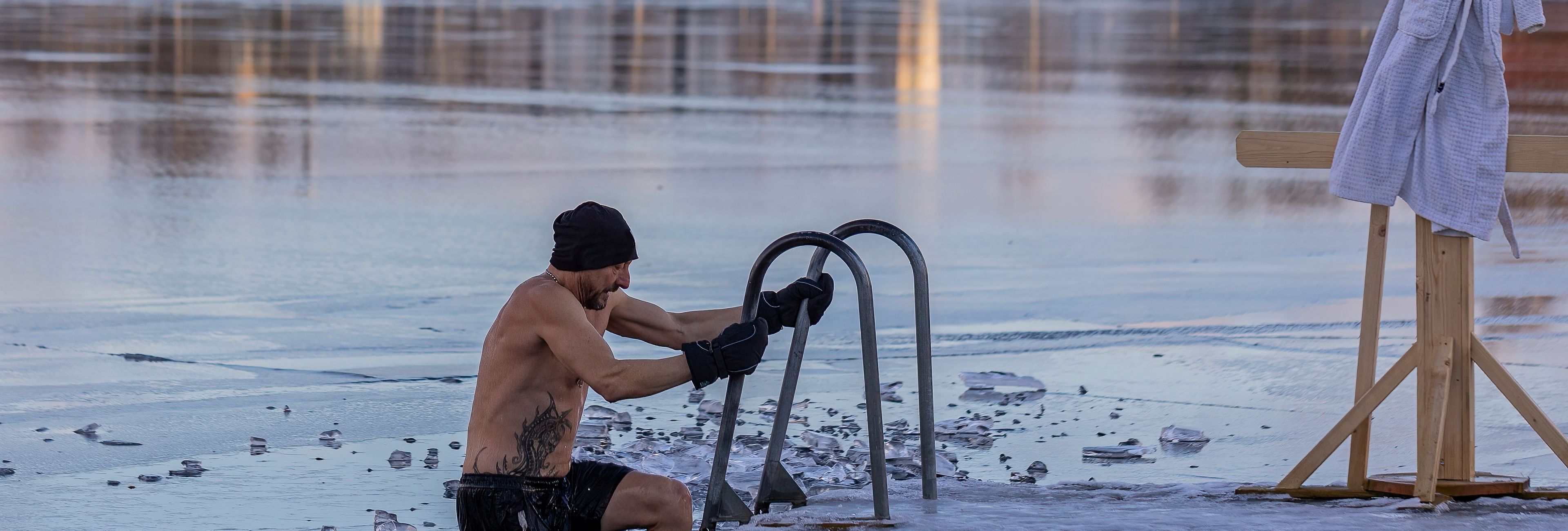
Why Your Pool Is Killing Your Recovery Protocol
You have been swimming laps in a chlorinated box your entire life. The water is temperature-controlled to a comfortable 78 degrees, the lane lines are perfectly straight, and the overhead lights hum at a frequency your body never evolved to process. Congratulations. You have been doing the equivalent of eating vending machine food and calling it nutrition. Your body is a cold water species. Your ancestors spent thousands of years hunting, gathering, and bathing in rivers, lakes, and oceans that ranged from bracing to genuinely brutal. Your cardiovascular system, your nervous system, your immune response, and your mental resilience were all built for cold exposure. You have been your biology by avoiding the very element that made it strong. Cold water swimming is not a trend. It is a rewilding protocol that will reset your entire operating system if you approach it correctly.
This article is not for people who want to dip their toes in and call it a cold plunge. This is the complete field-tested protocol for integrating cold water swimming into your fitness routine year-round. We will cover the science, the progression, the safety frameworks, and the stack that turns a random swim in cold water into a systematic upgrade of your biological hardware. If you are ready to stop coping with indoor temperature control, keep reading.
What Cold Water Actually Does to Your Body
The moment water temperature drops below your skin surface temperature, your body initiates a cascade of survival responses that, when triggered repeatedly and controllably, produce adaptations that no supplement, no drug, and no indoor training protocol can replicate. Your heart rate drops. Your stroke volume increases. Your blood vessels constrict and then dilate in a rhythmic pattern that researchers call vascular conditioning. This is not bro science. This is the mammalian dive response, and it is one of the most powerful tuning mechanisms available to the human system.
When you submerge your face in cold water, the trigeminal nerve fires and your parasympathetic nervous system activates. Your heart rate slows. Your breath drive decreases. Your body prioritizes blood flow to your core organs and your brain. This is the same response that allows seals to dive for 20 minutes and humans to hold their breath for competitive freediving. You are not just getting cold. You are activating a neurological override that modern humans have completely disconnected from by spending 90 percent of their lives in climate-controlled environments.
The research on cold water immersion consistently shows improvements in insulin sensitivity, lipid profiles, and inflammatory markers. Athletes who incorporate cold water swimming report faster recovery between sessions, improved sleep quality, and a resilience to stress that carries over into their daily lives. The mechanism is straightforward. Cold stress is a hormetic stressor, which means it triggers a protective response that makes your cells more robust. Your body produces more cold shock proteins. Your antioxidant systems upregulate. Your inflammation resolution pathways become more efficient. Every time you get in cold water, you are essentially running a diagnostic and update cycle on your cellular infrastructure.
Beyond the physiological, the mental effects are where most people see the most dramatic shift. Cold water swimming is exposure therapy without a therapist. You learn to regulate your emotional state under discomfort. You develop a relationship with fear that is productive rather than paralyzing. You discover that the voice in your head telling you to get out is often lying, and that your actual limits are much further out than you assumed. This is not metaphorical. The neurological rewiring that occurs through repeated cold exposure changes how you respond to adversity in every domain of your life.
The Progression Protocol: From Dipper to Year-Round Swimmer
Do not start by jumping into a frozen lake in January. That is not a protocol. That is an emergency room visit waiting to happen. The cold water swimming protocol has four stages, and each one has specific entry criteria, duration targets, and exit conditions. Move through the stages based on adaptation, not calendar time.
Stage one is the acclimatization phase, and it covers your first eight to twelve exposures. Water temperature should be between 60 and 68 degrees Fahrenheit for this stage. Begin with partial immersions. Get in to your waist, then your chest, then your shoulders. Let your skin adapt. Breathe. Do not rush the submersion. The goal is to train your thermoregulatory system to respond without panic. Duration targets for this stage are 30 seconds to 3 minutes total in the water. You are not swimming yet. You are learning the temperature. Exit this stage only when you can stand in the water at chest level without shivering uncontrollably and when your breath has normalized within 30 seconds of entry.
Stage two is the functional swimming phase. Once you can enter cold water without a panic response, you begin actual swimming. Start with 5 to 10 minutes of continuous swimming in water between 55 and 62 degrees. Keep your strokes relaxed. Your body is working twice as hard to maintain core temperature, so your pace will naturally drop. This is correct. Do not try to maintain your pool pace. The swimming is the delivery mechanism for the cold exposure, not a performance test. You are building the connection between controlled breathing and cold stress. By the end of this stage, you should be able to swim for 15 minutes comfortably in water above 55 degrees.
Stage three is the extension phase. This is where you push duration and drop temperature simultaneously. Aim for 20 to 30 minutes of swimming in water between 48 and 55 degrees. Begin incorporating head submersion if you have not already. The face is where most of the dive response activation happens, so omitting it is leaving gains on the table. By the end of stage three, you should be able to maintain a steady swim for 30 minutes in water that feels genuinely cold. You will know you are here when you stop fighting the temperature and start treating it as background information.
Stage four is the maintenance and depth phase. At this point, cold water swimming becomes a year-round practice regardless of season. You maintain your tolerance through consistent exposure rather than building it fresh each spring. Some swimmers at this stage begin incorporating breath work underwater, swimming longer distances, or participating in local cold water swimming groups. Water below 48 degrees becomes your operating range. Duration extends to 30 to 60 minutes depending on conditions and your training goals. This stage is never fully complete. You are always refining, always adapting, always learning how your body responds under different conditions.
Location Selection and Safety Framework
The location matters more than most people realize, and it determines whether you are running a protocol or rolling dice. Natural water bodies have current, depth variation, wildlife, and water quality variables that indoor pools completely eliminate. Understanding these variables is not optional. It is the difference between a controlled exposure and a rescue scenario.
Never swim alone in open water. This rule is non-negotiable regardless of your experience level. Cold water swimming accidents are almost always solo incidents where the swimmer overestimated their tolerance or encountered an unexpected condition. Find a community. Join a local cold water swimming group. Swim with a partner who stays on shore or in a kayak and watches you the entire time. If you do not have a partner or a group, you are not ready to swim alone. Accept this and act accordingly.
Assess the water body before you enter. Look for boat traffic, currents, underwater hazards, and access points. Rivers with any measurable current require an exit strategy downstream. Lakes can have thermal layers where the surface temperature is tolerable but water 10 feet down is significantly colder. Oceans have tides, rip currents, and wave patterns that change throughout the day. Do your reconnaissance before you commit. Walk the shoreline. Identify where you will enter and where you will exit. Calculate how long it would take to swim to shore from your entry point if something goes wrong. If that time exceeds your current tolerance, do not enter.
Water quality is a real concern that people gloss over. Runoff, agricultural drainage, and combined sewer overflow events can make natural water bodies hazardous in ways that are not visible. Check local water quality reports when available. After heavy rain events, bacteria levels in rivers and streams can spike dramatically. If the water smells wrong, looks discolored, or has obvious industrial or agricultural runoff visible, skip the swim. The health benefits of cold water exposure are not worth a bacterial infection or chemical exposure.
Gear serves the protocol, not the ego. You do not need a wetsuit for cold water swimming if you are training your adaptation. However, you do need certain non-negotiable items. A bright swim cap or tow float that makes you visible from shore and from boats. Shoes for river or lake bottoms that protect your feet from rocks, glass, and other hazards. A change of dry clothes staged at the exit point before you get in the water. A thermos of warm liquid for after you exit. A towel that is actually warm, not a thin travel towel that provides psychological comfort but no thermal relief. If you are swimming in water below 50 degrees, consider a safety whistle and a means of calling for help if you become incapacitated.
The Post-Swim Protocol and Recovery Stack
Getting out of cold water is only half the protocol. What you do in the 30 minutes after you exit determines how much of the adaptation you actually capture. Your body is still in survival mode when you pull yourself onto the shore. Your blood is being redistributed. Your core temperature is still dropping. Your sympathetic nervous system is activated. The post-swim protocol brings you back to baseline in a way that locks in the gains.
Step one is immediate movement. Do not sit down. Do not stand still. Walk. Pace. Move your large muscle groups. Shivering is your body's mechanism for generating heat, and it is metabolically expensive, but it is also the signal that thermoregulation is working. Let it happen. Keep moving until the shivering stops and your core temperature has normalized. For most people in moderate conditions, this takes 10 to 20 minutes of active recovery.
Step two is gradual re-warming. The instinct is to get into a hot shower immediately. This is wrong. Rapid re-warming can cause paradoxical vasodilation, tissue damage, and cardiovascular stress. Warm drinks, dry clothing, and ambient warmth are the correct approach. Get your core temperature up through metabolic generation, not external heat application. If you are shivering for more than 20 minutes after exiting the water, you stayed in too long. Adjust your protocol next time.
The stack that amplifies cold water swimming includes specific nutritional and supplemental support. Omega-3 fatty acids from wild-caught fish support cell membrane fluidity and reduce inflammation from cold stress. Magnesium from natural sources like Epsom salt baths or supplemental magnesium glycinate supports nervous system recovery and thermoregulation. Vitamin D from adequate sun exposure during daylight swims is essential for calcium metabolism and immune function. The cold water itself generates a temporary increase in glutathione production, so supporting your antioxidant systems with colorful plant foods, particularly those high in anthocyanins and polyphenols, makes the exposure more productive.
Sleep after cold water swimming is typically deeper and more restorative than baseline. This is a feature, not a side effect. Your circadian rhythm gets reinforced by the morning light exposure that should accompany your swims, and your parasympathetic tone remains elevated for hours after the exposure. Use this. Plan your swims for the morning or early afternoon so that you have time to eat, recover, and enter evening wind-down before bed. Swimming in cold water at 9pm and expecting to sleep well immediately after is a mismatch with your physiology.
Building the Habit: The Mental Game of Year-Round Cold Swimming
The physical protocol is the easy part. Anyone can get in cold water. The mental protocol is what determines whether you maintain the practice through winter, through doubt, through the voices that tell you this is unnecessary, uncomfortable, and unreasonable. Your brain is built to resist discomfort that does not serve an immediate survival purpose. Cold water swimming serves survival purposes that are long-term and systemic, and your brain has not evolved to appreciate that distinction. You have to override the short-term alarm system with a longer-term framework.
The framework is simple. You are not swimming for pleasure. You are swimming for capability. Every time you get in cold water and get out, you have expanded the operational range of your biology. You have told your nervous system that you can handle conditions outside of the narrow band that climate control provides. You are building a person who is not fragile. That person shows up differently in board meetings, in difficult conversations, in physical challenges, in everything. The cold water is the training ground. The life you live outside the water is the application.
Track your exposure. Write down water temperature, duration, and how you felt before, during, and after. This is not optional. It is how you see your progress when motivation fades. It is how you identify patterns in your adaptation. It is how you prove to yourself that the protocol works when three months of data shows consistent improvement in tolerance, recovery time, and subjective wellbeing. Numbers do not lie. Your brain will lie to you about whether this is worth it. Your log will not.
The community matters more than most individualists want to admit. Find the people in your area who swim year-round. They exist in every region with accessible water. They swim in ice. They swim in snowmelt. They have already metabolized the fear and the doubt and the social weirdness of being the person who swims in cold water when everyone else is watching from shore. They will make you better and safer and more committed than you would be alone. Find them. Swim with them. Learn from them.
You are a mammal designed to function in the cold. Every day you spend in temperature-controlled comfort is a day your body forgets how to do what it was built to do. The cold water swimming protocol is not a challenge. It is a correction. Get in the water. Start with what you can handle. Build from there. The reset you are looking for is waiting for you in every river, lake, and ocean within reach of where you live. Your move.


