Cold Water Immersion: Outdoor Recovery Protocol (2026)
Cold water immersion outdoors accelerates recovery, reduces inflammation, and boosts performance by leveraging natural cold exposure combined with wilderness environments for maximum physiological adaptation.
Why Your Cold Plunge Tub Is a Waste of Money
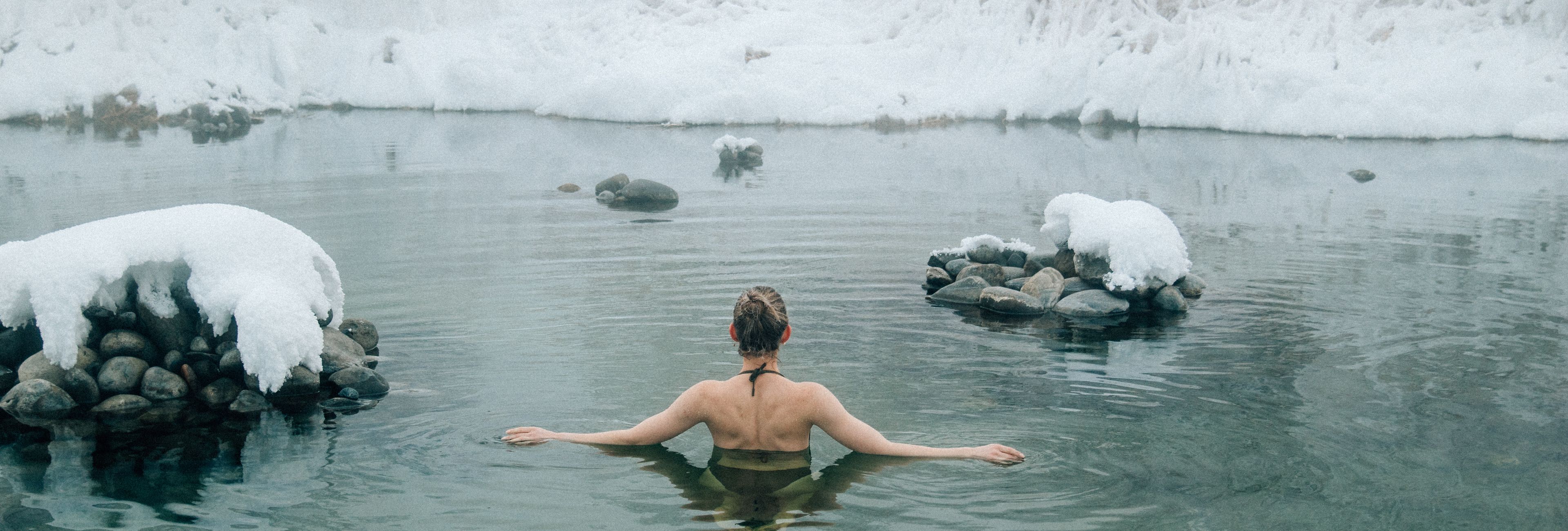
Your $4,000 plunge tub is a coping mechanism. You know this. You bought it because you heard Huberman talk about cold exposure and you wanted the protocol without the inconvenient variables. But here is the thing about manufactured cold: it does not carry the variables that make the real thing work. A man-made tank at 50 degrees is cold water immersion. A river at 50 degrees in February with current running through your legs and a headwind cutting across your wet shoulders is a different animal entirely. One is recovery theater. The other is rewilding your recovery system. The distinction matters if you are serious about this.
Outdoor cold water immersion strips away the artificiality and forces your body to interact with actual environmental conditions. Water temperature fluctuates. Air temperature changes. You are standing on a rock while cold water runs through your legs and you are managing your breath while the current pulls at your body. None of this is replicable in a box. The nervous system response is more profound because the context is more real. Your body knows the difference between a plastic tub and a moving river, even if your psychology has not caught up yet.
The outdoor protocol is not complicated. But it is demanding in ways that manufactured exposure is not. You have to read conditions. You have to manage your exit. You have to be present in a way that holding your phone while sitting in a plastic box does not require. That presence is not incidental to the protocol. It is the protocol. Cold water immersion without the outdoor context is missing the part that actually changes you.
The Field-Tested Cold Water Immersion Protocol
The standard entry point is straightforward. Find a body of water where you can stand. Rivers work best because the current adds a variable that your nervous system has to manage. Lakes and ocean are valid but less dynamic. Water temperature should be 50 degrees Fahrenheit or below for meaningful exposure. Summer lake swims at 70 degrees are not cold water immersion. They are swimming. The distinction is not elitism. The distinction is that meaningful cold exposure requires cold. Above 55 degrees, you are getting cardiovascular benefit but missing the hormetic stress that makes the protocol actually function.
Approach the water at a pace that elevates your heart rate slightly before entry. Do not sprint. Walk with intention. The anticipatory stress response matters. When you walk into cold water and your breath catches, that is the protocol starting. The shock response is not something to fight through. It is the protocol. Your breath will accelerate. Your chest will feel tight. You will have an urge to turn back. You proceed.
Once you are chest deep, submerge everything. No keeping your head above water to stay comfortable. Full immersion. The initial response will be dramatic. You will gasp. Your heart rate will spike. Your peripheral blood vessels will constrict hard enough that you can feel it in your extremities. This is the sympathetic activation phase. It lasts 30 to 90 seconds and it is not pleasant. That is by design. The discomfort is the signal that you are in the right window.
After the initial spike, your breath will begin to regulate. This is when the protocol shifts from survival to recovery. Find your position. Standing works. Submerging to your neck is ideal. Stay in the water for 3 to 5 minutes initially. Do not extend past 8 minutes in the first month. Time in cold water is not linear. The risk of afterdrop, where your core temperature continues to drop after exit, increases substantially past 8 minutes when you are not adapted. The goal is to activate the adaptive response, not to prove something to yourself.
Exit the water and dry off immediately. Do not stand around wet. The wind chill after immersion is a real concern and it is where most people who get hurt go wrong. They exit and start walking and their skin is wet and the wind strips heat faster than their body can generate it. Get dry. Get layers on. Move your body to generate heat. Shivering is fine. Violent shivering is an indication that you stayed too long or exited too slowly. Adjust next time.
Progression System: How to Build the Adaptation
Adaptation to cold water immersion is real and measurable but it happens on its own timeline. You cannot accelerate it by pushing harder. The progression system is about consistent exposure with incremental increases in duration and severity. The body adapts when it is given reason to adapt, not when it is pushed beyond its current capacity.
Phase one is the initiation phase. For the first three weeks, you stay in the 3 to 5 minute range. You do not push this. You do not try to prove anything. You are establishing that cold water immersion is a regular practice in your life. Three sessions per week is the minimum. Daily is better if conditions allow and your schedule supports it. The frequency matters more than the duration at this stage. You are teaching your nervous system that cold exposure is a recurring context, not a one-time event.
Phase two is extension. Weeks four through eight, you begin increasing time in the water. 5 to 7 minutes becomes the standard. You start seeking colder water. February water is colder than November water in most regions. The same river that was 52 degrees in fall is 38 degrees in late winter. That is not a problem. That is progression. You are now adapted enough to handle the lower temperature without the same initial spike. The sympathetic response is dampened. Your breath regulates faster. You can extend because you have earned the capacity to extend.
Phase three is contextual integration. By month three, cold water immersion should be part of a broader protocol stack. The ideal sequence involves morning sun exposure followed by movement and breath work, culminating in cold water immersion. The cold plunge after sun exposure and movement creates a hormonal context that you are not replicating by doing cold exposure in isolation. The cortisol management from morning light, the dopamine from movement, and then the catecholamine dump from cold water: this stack is where the real adaptations happen.
Long-term maintenance is not about constantly extending duration. Past 10 to 12 minutes, you are not getting significantly more adaptation. You are flirting with diminishing returns and afterdrop risk. The maintenance window for cold water immersion is 8 to 15 minutes, 3 to 5 times per week, in water below 50 degrees. That is the sustained protocol for someone who has been doing this for more than six months. Everything beyond that is ego.
The Science You Actually Need to Understand
Most people who talk about cold water immersion benefits cite vagal tone, cortisol regulation, and anti-inflammatory cytokine response. All of this is accurate but it is not specific enough to be useful. Here is what the research actually describes.
Cold water immersion activates the sympathetic nervous system in the first 30 to 90 seconds, followed by a parasympathetic rebound that is more profound than baseline once you exit. This means your recovery window accelerates. Post-exercise cold water immersion in particular has shown meaningful reductions in delayed onset muscle soreness and inflammatory marker presence 24 to 48 hours post-exercise. This is not theory. It is measurable in blood markers and subjectively validated in recovery metrics like range of motion and soreness self-report.
The vagal tone improvement comes from the dive response, which is the same physiological mechanism that slows your heart rate when you submerge your face in water. This is why full face immersion matters. The mammalian dive reflex is real and it is accessible through outdoor cold water immersion in a way that partial exposure does not replicate. Face in water triggers the reflex. Face out of water does not. This matters for the neurological benefits, not just the thermal stress.
Brown adipose tissue activation is a longer-term adaptation that comes from consistent cold exposure over months. This is the tissue that generates heat through non-shivering thermogenesis. You are not building BAT in your first week. You are not even building it in your first month. But by month three of consistent cold water immersion, most people report that the initial shock response is significantly diminished. This is not just acclimatization. This is measurable physiological change in how your body handles cold.
The anti-inflammatory effect is real but it is dose-dependent and context-dependent. Acute cold exposure reduces inflammation locally. Chronic cold exposure changes baseline inflammatory markers. The mechanism involves cold-induced norepinephrine which has anti-inflammatory properties at the cytokine level. But if you are doing cold water immersion while already in a high inflammatory state from overtraining or poor sleep, the benefit is diminished. Cold water immersion is not a fix for a broken protocol. It is a component of a protocol that is already functioning.
Seasonal Protocol: Adjusting for Real Conditions
Winter cold water immersion is not the same protocol as summer. The risks are different. The preparation is different. The exit strategy becomes the most critical variable. Most of the serious incidents in outdoor cold exposure come from people who treated January the same way they treated July.
In winter, your preparation phase is longer. You need to be already warm when you enter cold water. Not hot. Warm enough that the initial thermal shock does not drop your core temperature from a baseline that is already marginal. Body temperature fluctuates seasonally even without exposure. If you are cold when you enter cold water in February, you are starting behind the baseline that the protocol expects. Warm up first. A brief movement sequence. A warm drink. This is not optional in cold months.
Exit strategy in winter requires a staged rewarming protocol. You cannot stand in snow and let your skin air dry. You need a dry layer immediately. A base layer that goes on while you are still wet, followed by a puffy layer, followed by movement. Shivering is your friend here. Your body is generating heat through shivering and you do not want to stop that process early. Do not get in a hot shower immediately. The peripheral vasodilation from hot water can drop your core temperature further. Warm from the core out, not the outside in.
Summer cold water immersion is easier but it is also where people get sloppy. Warm water exposure is not cold water immersion. You need to be honest about whether you are actually getting the protocol or just going for a swim. Water below 60 degrees in summer requires travel to colder sources: snowmelt rivers, high-altitude lakes, deep water that has not warmed. These sources exist in summer months but they require knowing where to find them. A lake that is 75 degrees in August is not helping you. You are swimming. Swimming is fine. Just call it what it is.
The shoulder seasons, spring and fall, are the optimal times for cold water immersion in most temperate climates. Water temperatures are consistently in the 40 to 55 degree range without the extreme risks of winter. You can get full protocol benefits with reduced exit risk. If you are starting out, target these seasons for establishing your practice. Winter is for people who have already built the baseline.
The Mistakes That Will Cost You
The most common mistake is extending duration before you have earned the adaptation. Three months in, people feel capable and they push 15, 20, 25 minutes because their ego has outpaced their physiology. The afterdrop risk is real. Core temperature can continue to drop for 30 to 45 minutes after exit. The mechanism involves peripheral vasoconstriction trapping cold blood that is then re-circulated as peripheral vessels dilate during rewarming. This is not theoretical. People end up in emergency rooms because they stayed in cold water too long and then rewarmed too fast. Stay in your window. The window works.
Second mistake is solo exposure in remote locations without a communication and check-in protocol. Cold water immersion can cause loss of motor function at the tails of exposure, meaning the first minute and the period after 10 minutes if you have been in too long. If you are alone on a remote river and you lose manual dexterity and coordination, you may not be able to get yourself out. This is not fear-based caution. This is documented reality. Have someone who knows where you are and has a timeline for checking in. This is non-negotiable.
Third mistake is treating cold water immersion as a replacement for proper recovery elsewhere. If you are sleeping four hours per night and eating garbage and doing cold exposure, you are not rewilding. You are adding a stressor to a system that is already maxed out. Cold water immersion is recovery amplification for systems that are already being managed correctly. It is not recovery in isolation. The protocol works when it is part of a broader structure of sleep, nutrition, movement, and light management. Without those foundations, cold exposure is just exposure.
Fourth mistake is ignoring contraindications. If you have cardiovascular issues, cold water immersion carries elevated risk. If you are pregnant, the protocol changes significantly. If you have Raynaud's or other vasomotor disorders, the cold response is unpredictable. None of this means you cannot do cold water immersion. It means you do your research and you proceed with awareness. The outdoor context does not protect you from your own medical realities.
What Comes Next
Cold water immersion will not save you. It will not fix your sleep, your relationships, your job performance, or your general sense of malaise. What it will do is give you a reliable anchor point for sympathetic and parasympathetic regulation that is difficult to replicate through any other means. The discipline of getting in cold water consistently, managing the initial shock, extending your capacity, and exiting properly translates into other domains of your life. This is not metaphor. The nervous system regulation you develop in a river in February is the same regulation you deploy when your boss is on your case or your flight is delayed or your body is exhausted and you need to perform.
The outdoor component is not optional if you want the full effect. Manufactured cold exposure is better than nothing. It is a valid protocol for people who have no access to natural water bodies or who live in climates where winter swimming is genuinely unsafe given their location and resources. But if you have access to a river, a lake, an ocean, a cold spring: use it. The variables you cannot control in outdoor immersion are part of the protocol. The current, the air temperature, the uncertainty of the approach. These are not obstacles to the protocol. They are the protocol. Your nervous system evolved in these conditions. It responds to them in ways that plastic and recirculated water cannot replicate.
Find your water. Get in it. Stay in the window. Repeat. That is the entire protocol. Everything else is elaboration.


