Overnight Backpacking: First Trip Checklist
Your first overnight backpacking trip does not need to be complicated. It needs to be safe, comfortable enough to enjoy, and light enough to carry. Here is the complete checklist.
Before You Buy Anything: The Mindset Shift
Overnight backpacking is not day hiking with a heavier pack. It is a different activity with different risks, different gear requirements, and a fundamentally different relationship with the trail. On a day hike, you can always turn around and be home. On an overnight, you are committed. You are carrying everything you need to sleep, eat, navigate, and stay safe in the backcountry, on your back, for miles. That commitment is the entire point. It is also where most first-timers make mistakes that are uncomfortable at best and dangerous at worst.
The biggest mistake is overpacking. Your first instinct will be to bring everything you might need. Resist this. Every ounce on your back is an ounce you carry for every step of every mile. The difference between a 25-pound pack and a 40-pound pack is the difference between a transformative experience and a miserable slog that makes you never want to go again. The goal of your first trip is not to test your endurance. It is to fall in love with the experience so you want to go back.
The second biggest mistake is buying cheap gear for critical systems. Your sleep system, your pack, and your footwear are not places to save money. A sleeping bag rated 20 degrees warmer than the expected low, a pack that fits your torso correctly, and boots that do not give you blisters are non-negotiable. Everything else can be improvised, borrowed, or upgraded later. These three items need to be right from day one.
Choose your first trip carefully. Pick a trail you have day-hiked before, 5 to 8 miles round trip, with reliable water sources and mild weather. Do not make your first overnight a 12-mile death march in unpredictable conditions. You are learning systems, not testing limits. The limit testing comes later, when your systems are dialed.
The Gear Checklist: What You Actually Need
This checklist is organized by system, not by pack location. Each system is critical. Do not skip any of them.
The Big Three: Pack, Shelter, Sleep System. These are the heaviest and most important items you carry. Get them right and everything else follows.
Your pack needs to fit your torso length, not your height. Go to a gear shop and get measured. Try on packs with weight in them. A pack that feels empty in the store will feel entirely different with 25 pounds loaded. Look for a 50 to 65 liter capacity for overnight trips. You do not need a 75-liter expedition pack. That is for multi-day wilderness routes, not your first overnight.
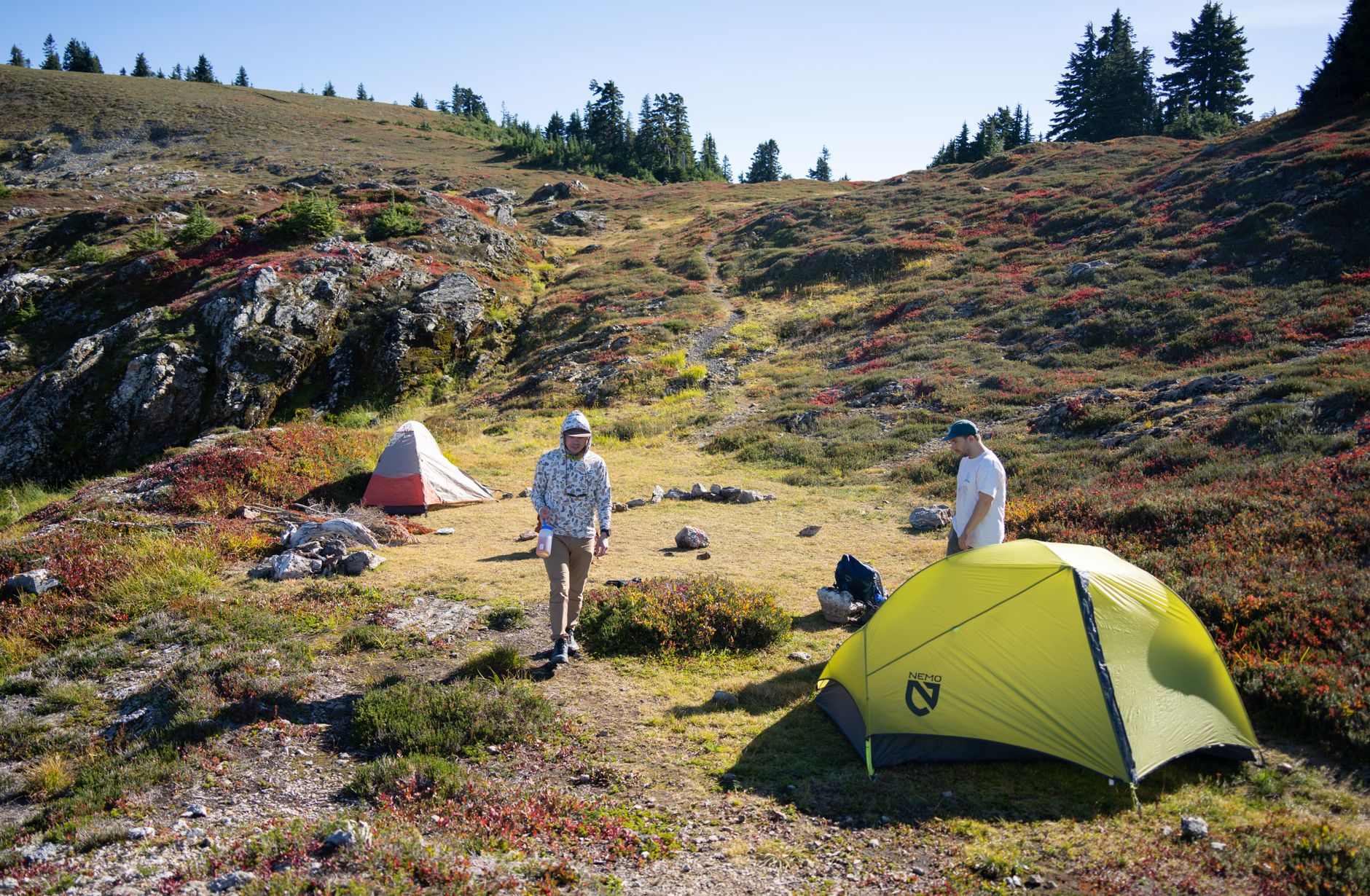
Shelter is a tent for your first trip. A tarp system is lighter and more versatile, but requires skill to pitch correctly, and your first overnight is not the time to learn. Get a two-person tent that weighs under 4 pounds. The two-person designation gives you room for your gear inside, which matters more than you think when it rains. Practice pitching it in your yard or living room before you hit the trail. The first time you set up your tent should not be in the dark at camp.
Your sleep system is a sleeping bag and a sleeping pad. The bag should be rated 15 to 20 degrees Fahrenheit below the expected nighttime low. If the forecast says 40 degrees, bring a 20-degree bag. Sleeping bag ratings are survival ratings, not comfort ratings. A 20-degree bag means you will survive at 20 degrees, not that you will be comfortable. The pad is equally important. The ground will conduct heat away from your body all night. A pad with an R-value of 3.5 or higher is the minimum for three-season camping. Your sleeping pad is not a luxury item. It is half of your sleep system.
Clothing: The Layer System. You need three layers: a base layer that wicks moisture, a mid layer that retains heat, and a shell layer that blocks wind and rain. Cotton is a death trap in the backcountry. It holds moisture, loses insulation value when wet, and takes forever to dry. Wear merino wool or synthetic base layers. Pack a down or synthetic insulated jacket for the mid layer. Bring a waterproof shell for rain. Pack one extra pair of socks. That is your entire clothing system for an overnight. You do not need a change of clothes for every activity. You need to stay warm and dry.
Food and Water. Water is the heaviest thing you will carry. One liter weighs 2.2 pounds. Plan your route around water sources and carry only what you need between sources. A filter or purification tablets are mandatory. Do not drink untreated backcountry water. For food, pack 2,500 to 3,500 calories depending on your size and the difficulty of the trail. Calorie density is king. Nuts, nut butters, cheese, dried fruit, jerky, instant oatmeal, and freeze-dried meals are the staples. Hot food at dinner is a morale booster worth the weight of a small stove and fuel canister. Cold soaking is lighter but miserable after a long day. Bring a stove.
Navigation and Safety. A physical map and compass that you know how to use. A GPS device or phone with downloaded offline maps as backup. A headlamp with fresh batteries. A basic first aid kit: bandages, blister treatment, pain medication, antihistamines, and any personal medications. A fire starter: waterproof matches or a lighter. A knife or multi-tool. An emergency whistle. These items together weigh less than a pound and can save your life.
The Small Items That Make or Break a Trip. A poop kit: a small trowel, toilet paper, and hand sanitizer. This is non-negotiable. Sunscreen and lip balm. Bug spray. Trekking poles, which reduce knee impact on descents by up to 25 percent and are worth every ounce. A stuff sack for trash. Duct tape wrapped around your water bottle. A small power bank for your phone. Camp shoes or sandals for letting your feet recover at camp. These are the details that separate a good trip from a tolerable one.
The Night Before and the Morning Of
Lay out every item on your checklist the night before. Do not pack from memory. Pack from the list. Check every item off as it goes into your pack. This is not obsessive. This is how you avoid realizing at 10 pm in the backcountry that you forgot your sleeping pad or your only pair of socks.
Organize your pack by weight and access. Heavy items go in the middle of the pack, close to your back. This keeps your center of gravity stable. Light, bulky items like your sleeping bag go at the bottom. Items you need during the day, snacks, rain shell, water, go in the top lid or external pockets. Items you only need at camp, tent, sleep clothes, stove, go in the main body below the heavy items.
Start early. Plan to be on the trail by 8 am at the latest. This gives you a full day of hiking in daylight, which means you are not rushing, not making navigation errors in fading light, and arriving at camp with time to set up before sunset. The number one cause of backcountry accidents is rushing. Leave early, hike steady, arrive with time to spare.
Eat a real breakfast before you leave the trailhead. Not a bar. Not coffee. A meal with protein, fat, and complex carbohydrates. Oatmeal with nut butter, eggs and toast, whatever digests well and gives you sustained energy. The first two hours of hiking are when your body is adjusting to the load. Do not start that adjustment on empty.
At Camp: The Systems That Keep You Comfortable
Arriving at camp is not the end of the effort. It is the transition from hiking systems to camp systems, and both need to be dialed.
Pitch your tent first. Before anything else. Before changing clothes, before filtering water, before cooking. If the weather turns, you need shelter ready. Find a flat spot with no rocks or roots. Check for overhead hazards, dead branches, widowmakers, that could fall on your tent. Pitch the tent, stake it down, and put your sleep system inside. Even if it does not rain, dew will soak everything left outside overnight.
Filter water next. Fill your bottles and your backup container. Hydrate before you are thirsty. After a day of hiking, you are almost certainly behind on fluids. Drink a full liter before you start cooking.
Cook dinner while there is still light. A headlamp works in a pinch, but cooking in daylight is easier, safer, and more enjoyable. Clean up thoroughly. Food residue attracts animals, even in areas where bears are not a concern. Mice, raccoons, and chipmunks will chew through your pack for a crumb. Store all food and scented items in a bear canister or hang them in a bear bag at least 200 feet from your camp.
Change into your sleep clothes. This is not optional. The clothes you hiked in are damp with sweat, even if they do not feel wet. Sleeping in them means your sleeping bag has to dry you before it can keep you warm. Sleep clothes should be dry, stored inside your sleeping bag during the day so they stay that way. Merino wool base layers are the standard.
Before you turn in for the night, check your pack. Are the straps loosened so they can dry? Is your phone charged enough for navigation tomorrow? Is your headlamp accessible? Is your water bottle full and inside the tent so it does not freeze if the temperature drops unexpectedly? These checks take 30 seconds and prevent the most common morning frustrations.
Sleep. Your first night in the backcountry will not be the best sleep of your life. The ground is hard, the temperature drops, and every unfamiliar sound will wake you. This is normal. Accept it. Your body is adjusting. By the second night, you will sleep deeper than you have in months. The backcountry resets your circadian rhythm. The total darkness, the temperature drop, the physical exhaustion, and the absence of screens create the conditions for the deepest sleep your body is capable of producing. This is the reward for carrying the weight.
In the morning, pack up efficiently. Break camp in reverse order. Stuff your sleeping bag last, right before you put on your pack. Eat breakfast before you start hiking. Check your campsite for trash and leftover food. Leave it cleaner than you found it. This is not just ethics. It is the protocol that keeps the backcountry open and wild for the next person.


