Foraging Wild Edibles: A Beginner's Safety Guide (2026)
Learn to safely identify and harvest wild edibles with our comprehensive guide. Master the basics of foraging for survival skills and nutrition from nature's pantry.

The Original Food Protocol Is Still the Best
Your ancestors did not have grocery stores. They had eyes, knowledge passed down through generations, and a willingness to walk into the wild and eat what worked. You have smartphone screens, anxiety about misidentification, and a grocery delivery app on speed dial. Time to close that gap.
Foraging wild edibles is not a trend. It is the original food system, the one that fed human beings for hundreds of thousands of years before agriculture showed up and started screwing everything up. When you learn to identify even five edible plants in your region, you unlock a form of food security and connection to your ecosystem that nobody can take away from you. That is the real prep, the one that matters when supply chains hiccup and grocery prices spike.
This is the beginner protocol. The real one. Not a listicle of "10 plants you can eat" that skips over the details that keep you alive. We are going to cover identification principles, safety rules that exist for reasons written in blood, legal frameworks, ethical considerations, and a starter list of plants that are forgiving enough for new foragers. By the end, you will know how to start building your own relationship with the land beneath your feet.
Understand this before we go any further: foraging is a skill. Like any skill, it requires investment. You will not read one article and become competent. But you can read this article and understand the framework that makes competence possible. The rest happens in the field, with a plant in one hand and a field guide in the other.
The Golden Rules That Keep You Breathing
There is exactly one rule that matters more than all others in foraging, and it is this: if you are not 100 percent certain, you do not eat it. Not 95 percent. Not close enough. Not "well, it looks like the pictures." One hundred percent. Certainty is non-negotiable.
This sounds simple. It is not simple in practice. The pressure to taste something you have been studying, the confidence that builds after three positive identifications, the desire to finally collect a basket of something edible after weeks of learning. These feelings will push you toward shortcuts. Do not take them. The difference between an edible plant and its toxic lookalike is sometimes a single attribute that requires magnification to see. That is not the moment to trust your naked eye because you are excited.
The second rule: start with plants that have no toxic lookalikes in your region. This is critical for beginners and remains important for experienced foragers. Some plants are forgiving because nothing that looks similar will hurt you. Others grow next to twins that will send you to the hospital or the morgue. You do not need to learn the dangerous ones first. You can build your skill set on the safe ones, then expand into trickier territory once you have developed the habit of careful observation.
Rule three: never eat a plant you found while impaired. Alcohol, exhaustion, emotional distress, time pressure, hunger. These states degrade the part of your brain responsible for careful identification. Foraging requires patience and attention. If you are not in a mental state to double-check every detail three times, you are not in a mental state to forage.
Rule four: start with the leaves. In general, green above-ground portions of plants are more forgiving than roots, berries, and mushrooms. Roots require excavation, which often destroys the plant entirely and removes identifying features above ground. Berries in some families contain compounds that build up over time to toxic levels. Mushrooms require microscopic analysis for certain species and have the highest consequence for error of any foraging category. If you want to start somewhere, start with leaves you can observe in place, without disturbing the plant.
Rule five: sample small. Even with a positive identification, even with a plant that has no lookalikes, you introduce something new to your system. Your gut microbiome, your personal sensitivities, the specific compounds in that individual plant growing in that specific soil: all of these variables affect how your body responds. The protocol is simple. Touch the plant. Wait 24 hours. If no skin reaction, taste a small piece. Wait 24 hours. If no digestive distress, you can consider it part of your rotation. This is not paranoia. This is how adults consume new foods.
Identification Principles: How to Actually Know What You Are Looking At
Most people approach plant identification the way they approach everything else: they look for matches. They see a plant, compare it to a photo in a guide or on their phone, and if it looks close enough, they call it good. This approach will get you hurt eventually. Here is why.
Photos capture one plant in one location under one light condition at one moment in its growth cycle. Plants look dramatically different at different stages. A young dandelion rosette does not resemble a mature dandelion in full bloom, which does not resemble a dandelion gone to seed. A plant growing in full sun looks different from the same species growing in shade. A plant in poor soil looks different from the same species in rich soil. Using photos for identification without understanding the underlying principles is like trying to identify a person based on one unflattering photo taken at a weird angle.
The protocol for reliable identification is observation across multiple attributes. You are not looking for one matching feature. You are building a case. Leaf shape: is it entire, lobed, serrated, compound? If compound, how many leaflets? Stem: square, round, hollow, solid, fuzzy, smooth? Growth pattern: rosette, opposite leaves, alternate leaves, whorled? Flowers: color, number of petals, symmetry, arrangement on the stem? Odor: crush a leaf and smell it. Some plants are aromatic in ways that are distinctive and diagnostic. Habitat: is it growing in water, shade, full sun, disturbed soil, forest floor, rocky terrain? Time of year: what is the growth cycle in your region?
You need to answer all of these questions before you call a plant anything. Build your identification case like a prosecutor building a trial: every attribute is evidence, and the evidence must all point in the same direction. One mismatch means the case is not closed.
Carry at least one physical field guide for your region. Peterson Field Guides has reliable regional editions. Photographs and apps can supplement this, but a physical guide does not require battery life, cell signal, or a screen that is impossible to read in direct sunlight. The act of flipping through a guide teaches you how plants are organized and what to look for. Apps have their place for confirming identifications you have already developed a hypothesis about, but they are not a substitute for learning the framework.
Start Here: Beginner-Friendly Wild Edibles
These plants are chosen specifically because they have minimal toxic lookalikes in most of their range, are relatively easy to identify when you apply proper observation protocol, and offer genuine culinary or medicinal value. They are your starting point.
Dandelion (Taraxacum officinale) tops every beginner list for good reason. Every part is edible. Leaves are more bitter when mature but lose that bitterness when cooked or when harvested young in spring. Roots can be roasted and ground as a coffee substitute. Flowers make wine and fritters. Identification hinges on the hollow stem with milky sap, the deeply toothed leaves in a basal rosette, and the single yellow flower head on each stalk. The key lookalike is false dandelion, which is also edible, so even a misidentification here is not catastrophic. Still, learn the real one first.
Wood Sorrel (Oxalis) grows across most of North America and Europe. It has clover-shaped leaves in sets of three, which can trigger warning bells about clover, but clover leaves are not triangular. Wood sorrel leaves are heart-shaped when viewed properly. The plant has a distinct lemony tartness from oxalic acid, which makes it a great trail nibble and kitchen addition. In small quantities, the oxalic acid is not a concern for most people. Do not make it a daily dietary staple, and avoid it if you have kidney issues. The flowers are small and yellow or white depending on species.
Lamb's Quarters (Chenopodium album) is one of the most nutritious plants on the planet, with more protein per gram than cabbage or broccoli when you compare dry weight. The leaves are distinctive: mealy, slightly dusty to the touch, triangular with jagged edges. The plant grows upright and can reach six feet in rich soil. Young leaves and growing tips are the best eating, either raw in salads or cooked like spinach. The seeds are also edible but require processing to remove some antinutrients.
Plantain (Plantago major or lanceolata) is everywhere. It grows in sidewalk cracks, lawns, disturbed soil, trailsides. You have stepped on it your entire life and never noticed. Broad-leaf plantain has wide oval leaves with prominent parallel veins. Narrow-leaf plantain has, well, narrow leaves. Both are edible and also medicinal: crushing fresh leaves and applying them to insect bites or minor wounds is a traditional protocol that actually works for reducing inflammation and promoting healing. Young leaves are tender enough for raw eating. Older leaves need cooking.
Violets (Viola) have heart-shaped leaves and distinctive purple flowers that are difficult to confuse with anything else. The flowers and leaves are both edible, with a mild sweet flavor. Violet flowers make beautiful garnishes and can be infused into syrups. The leaves are high in vitamins A and C. The plant also has a history of medicinal use for respiratory complaints, though we are not making medical claims here.
Purslane (Portulaca oleracea) is a succulent that creeps along the ground in gardens, farm fields, and disturbed soil across most of the world. The stems and leaves are thick and juicy, with a mild lemony flavor. It is high in omega-3 fatty acids, which is unusual for a land plant. The seeds are also edible. Identification is straightforward if you look for the thick leaves and the way the plant lies flat against the ground, but note that there are some toxic lookalikes in the same family in certain regions. Confirm with your regional guide.
Where You Can and Cannot Harvest
The legal framework for foraging varies by jurisdiction and changes constantly. There is no universal answer here, which means you have to do research specific to your location. This is not optional. Fines for illegal harvesting can be substantial, and the practice of "but everyone does it" is not a legal defense.
Public land is the most accessible option for most people. National forests and BLM land in the United States generally allow personal-use foraging of common plants in reasonable quantities. The key phrase is "personal use," which typically means amounts that would fit in a paper bag, not commercial harvesting. National parks restrict foraging more heavily and often prohibit it entirely except in very limited circumstances. State parks and local parks vary by jurisdiction.
Private land requires explicit permission from the landowner. This is non-negotiable. Do not assume that rural land is unmonitored or that you can slip in and out unnoticed. Do not assume that posted signs are required for it to be private property. Ask first, always, and respect the answer.
Roadside harvesting is a category that requires caution. Plants growing within a certain distance of roadways absorb exhaust and potential chemical runoff from the roadside environment. Heavy metals accumulate in plant tissue. If you are harvesting from roadsides, choose locations with lower traffic volume and greater distance from the pavement edge. The nutritional profile of a wild plant is irrelevant if it comes with a dose of lead.
Contaminated sites are disqualifying. Industrial areas, old dump sites, agricultural fields where you do not know the spray history, any area where you cannot confirm the soil and water quality: these are not sources for food. The risk of heavy metal contamination, pesticide residue, or other toxins overrides any benefit of wild harvesting.
The Ethical Stack: Foraging Without Destroying
Foraging has been practiced sustainably by human communities for millennia. The protocols that emerged around it were not arbitrary. They were survival knowledge refined over generations, and they encoded a truth that industrial agriculture tries to ignore: you cannot harvest more than the system can replenish without eventually having nothing.
Take only what you need. This sounds obvious, but it needs to be said because the impulse to fill a basket is strong once you start finding edible plants. For a beginner, the goal is not to harvest a meal. It is to identify correctly, sample safely, and build familiarity with the plant in its environment. A few leaves for a salad is sufficient for a first outing. The plant you do not take today will be there tomorrow, or it will have spread seed that ensures it is there next year.
Leave the roots when possible. If you are harvesting above-ground portions, you are taking from the plant without killing it. It can regrow, and it can continue producing seed. This is the sustainable model. If you do need to harvest roots, harvest from a patch that is robust enough to sustain some loss, take only a portion of the roots from any single plant, and replant what you disturb.
Know your rare species. Some edible plants in your region may be uncommon or locally endangered. A plant that is common in one area may be protected ten miles away. If you encounter a species that is not abundant, photograph it, note the location, and leave it. Building your knowledge of rare species serves you twice: it keeps you legal, and it makes you useful to conservation efforts that track population changes over time.
Respect the ecosystem. The plant you want to harvest is part of a web. It may be a food source for specific insects, a nesting material for certain birds, a soil stabilizer in a sensitive area. Move slowly. Observe before you take. If you are in an area where your presence is disturbing wildlife significantly, adjust your behavior or your timing.
Your First Forage Protocol
Here is how you actually start. This is not a day-one harvest. This is a day-one learning mission with a zero-harvest goal. Your job today is to find one plant on the list above that grows in your area, observe it without touching beyond what is necessary for identification, and come home with documentation that helps you confirm the identification later.
Pick a location. A park, a trail, your own backyard if it has any green space. Urban environments support more wild edibles than most people realize. Dandelion, plantain, and lamb's quarters are globalists that do not care about pavement.
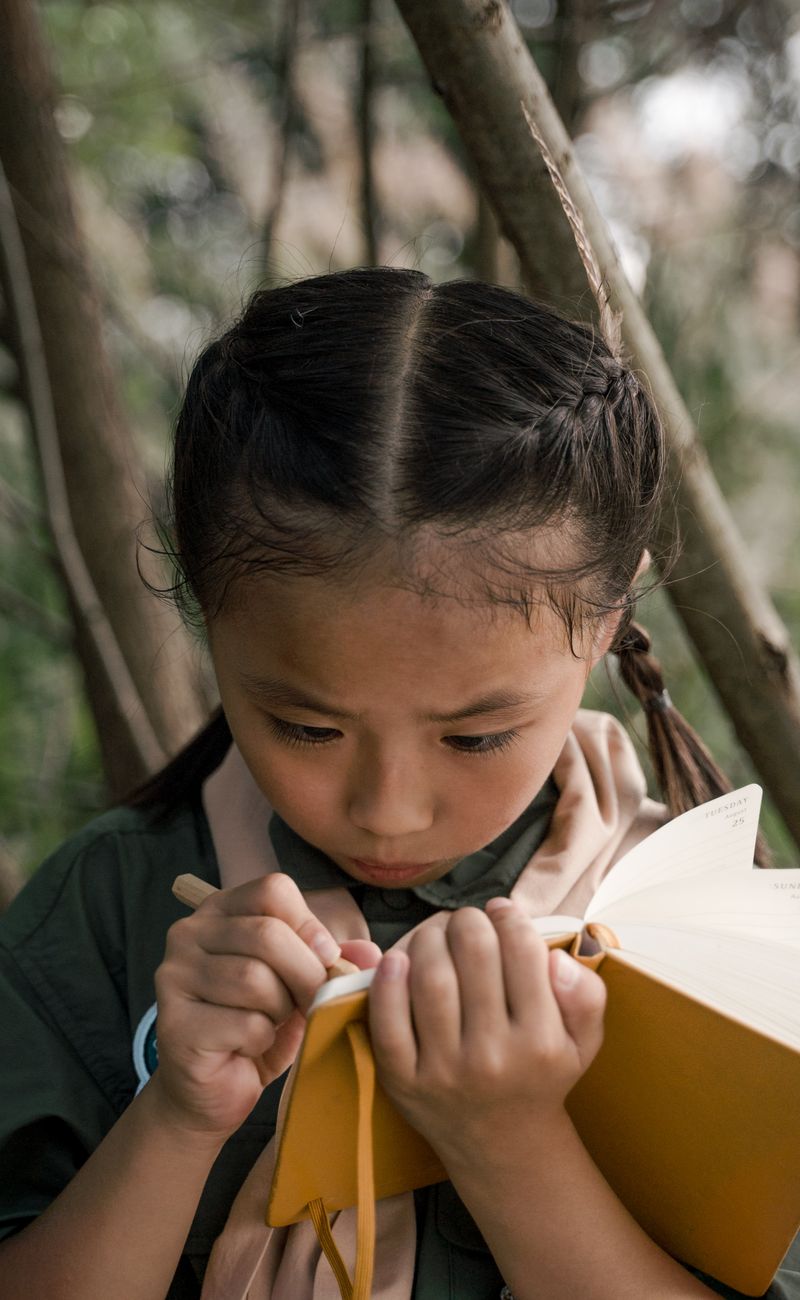
Bring a field guide, a small notebook, a camera, and nothing else. The camera is for capturing details you might miss in the moment: leaf arrangement, stem characteristics, surrounding plants, overall growth habit. The notebook is for recording location, date, and preliminary observations that you will organize later.
Walk slowly. This is not a hike. You are scanning the ground at a pace that allows you to notice individual plants. When you see something that might match a plant on your list, stop. Do not grab it. Observe. Build your identification case as described above. If it matches, photograph it in place, note the location, and move on without harvesting.
After you return home, compare your photos and notes against your field guide. Confirm or reject your identification hypothesis. If you confirmed it, you now have a documented location for a plant you know how to identify. That location is yours. Visit it again in a week, a month, across seasons. Watch how the plant changes. This is how you learn.
The protocol for your second outing is the same, except this time you can take a small sample if the identification is 100 percent confirmed and the location is appropriate for harvesting. Touch it. Take it home. Wait 24 hours. Apply it to your skin. Wait 24 hours. Taste a small piece. Wait 24 hours. If nothing happens, you have successfully completed your first forage, and your relationship with the land just fundamentally changed.
That is how it starts. Not with a basket full of wild greens. With one plant, correctly identified, in a place you can return to. The skills compound. The list grows. The confidence builds. And somewhere in the process, you stop being someone who only consumes from systems controlled by others and start becoming someone who knows how to eat from the earth itself.