Wilderness Sleep Training: How to Fall Asleep Anywhere in Nature (2026)
Master the ancient art of deep sleep in any outdoor environment with evidence-based wilderness sleep techniques. This comprehensive guide reveals how our ancestors slept effortlessly in nature,and how you can reclaim that primal sleep ability.

The Problem with Sleeping Like an NPC
Your sleep system is broken. Not broken in the clinical sense, but broken in the sense that your biology has no idea what time it is, what environment it is in, or what season it thinks the year is. You have spent thousands of nights sleeping in a temperature-controlled box, on a memory foam surface, with artificial light telling your pineal gland it is perpetually dusk. Your body has not had a genuine reason to produce melatonin at the correct time in months. This is the foundation of why you cannot sleep. This is why a weekend in the wilderness will fix more sleep issues than any supplement stack you have purchased. Wilderness sleep training is the protocol for restoring your natural sleep architecture by relearning how your body is supposed to enter rest states. This is not glamping with a memory foam pad. This is not sleeping in an Airbnb with blackout curtains. This is learning to fall asleep when the sun goes down, wake when it rises, and experience the deep delta wave sleep that your knew before electricity existed. The research on circadian biology, sleep restoration in natural environments, and the measurable benefits of earth-connected sleeping is extensive enough that you should stop treating your bedroom like a cave you built inside a house and start treating the outdoors as the sleep chamber your nervous system actually requires. The first thing you will notice when you sleep outdoors consistently is that you fall asleep faster. Not because you are exhausted from hiking, though that helps. You fall asleep faster because your circadian rhythm is receiving accurate environmental signals for the first time in years. The temperature drop at sunset, the absence of blue light, the sound of water or wind or silence, the slight humidity changes, the feeling of the earth beneath you. These are not luxuries. These are the inputs your sleep-wake cycle evolved to process. When you give your body those inputs again, the response is automatic.
Understanding Your Natural Sleep Architecture
Before you throw a tent in your car and drive to a state park, you need to understand what you are trying to recreate. Your body is not trying to sleep for eight hours straight because that is what you were told adults need. Your body is trying to follow the natural light-dark cycle, which historically meant sleeping in two segments with a period of lighter sleep in between. The monophasic eight-hour sleep schedule is a product of industrial scheduling, not evolutionary biology. In a wilderness sleep scenario, you will likely experience this biphasic pattern naturally. You will fall asleep shortly after sunset, enter deep slow-wave sleep, then gradually transition to lighter sleep as your body temperature rises slightly before dawn, then wake naturally as light hits your closed eyelids. This is not insomnia. This is your ancestral sleep architecture reasserting itself. Most people who abandon indoor sleeping report that within three to five nights, they wake before sunrise without an alarm and feel genuinely rested. This is not a coincidence. This is the protocol working. The quality of sleep you experience in nature, once your body adjusts, will be measurably different from indoor sleep. Studies on earthing and grounding show measurable changes in cortisol patterns, heart rate variability during sleep, and subjective sleep quality reports. Your body is designed to be in electrical contact with the earth while resting. This is not spiritual language. This is biophysics. The earth carries a subtle negative charge, and when you are sleeping on the ground or in contact with grounding materials, your body is in electrical equilibrium that it cannot achieve when sleeping on elevated surfaces surrounded by insulating materials. If you have been sleeping on a bed frame in a room with synthetic flooring, you have been electrically isolated from your primary environment for your entire adult life.
The Physical Protocol: Preparing Your Body and Your Sleep System
Sleeping on the ground is not comfortable for most people starting out. Your body has spent years adapting to the uniform support of a mattress, and the muscles that used to stabilize you while you slept have atrophied. This is the first physical barrier you will encounter in wilderness sleep training. The solution is not a thicker sleeping pad. The solution is gradual adaptation. Start by sleeping on the floor at home for thirty minutes each night, then extending that duration over weeks. You are not trying to replace your bed with a hardwood floor permanently. You are waking up the proprioceptive systems in your spine and hips that inform your body where you are in space while you sleep. A mattress makes these systems lazy. The ground requires them to work. When you go to the wilderness, your body will already know how to find comfortable positions without the constant feedback of a yielding surface. The sleeping pad is not optional, but it should be the minimalist option. A three-season sleeping pad with an R-value between four and five is sufficient for most conditions down to freezing. If you are sleeping in summer conditions, a foam pad with an R-value of two will keep you off the cold ground while being light enough to carry on longer routes. Inflatable pads provide more warmth per ounce but are subject to punctures and require more inflation effort. For wilderness sleep training, reliability matters more than weight savings. Bring the pad that will work every night, not the ultralight setup that might fail. Your sleeping bag is the next variable. Do not overbuy warmth rating. Your body generates significant heat, and an oversized sleeping bag will leave empty air space that your body must warm with metabolic output. A bag rated ten degrees below your expected low temperature will keep you warm without excess bulk. If you are training in shoulder season conditions, a zero-degree bag will serve you through most unexpected temperature drops without requiring you to layer clothing inside the bag, which reduces the bag's effectiveness. The pillow question is one of personal adaptation. Most wilderness sleepers eventually abandon the inflatable pillow and use a stuff sack of clothing instead. The higher position of a conventional pillow can actually reduce sleep quality by restricting neck alignment. When you sleep on the ground with a neutral spine position, your neck extends slightly forward, which is the position your cervical spine prefers when your trapezius muscles are fully relaxed. If you must have height, fill a compressible stuff sack with soft clothing and use that.
Environmental Mastery: Temperature, Light, and Sound
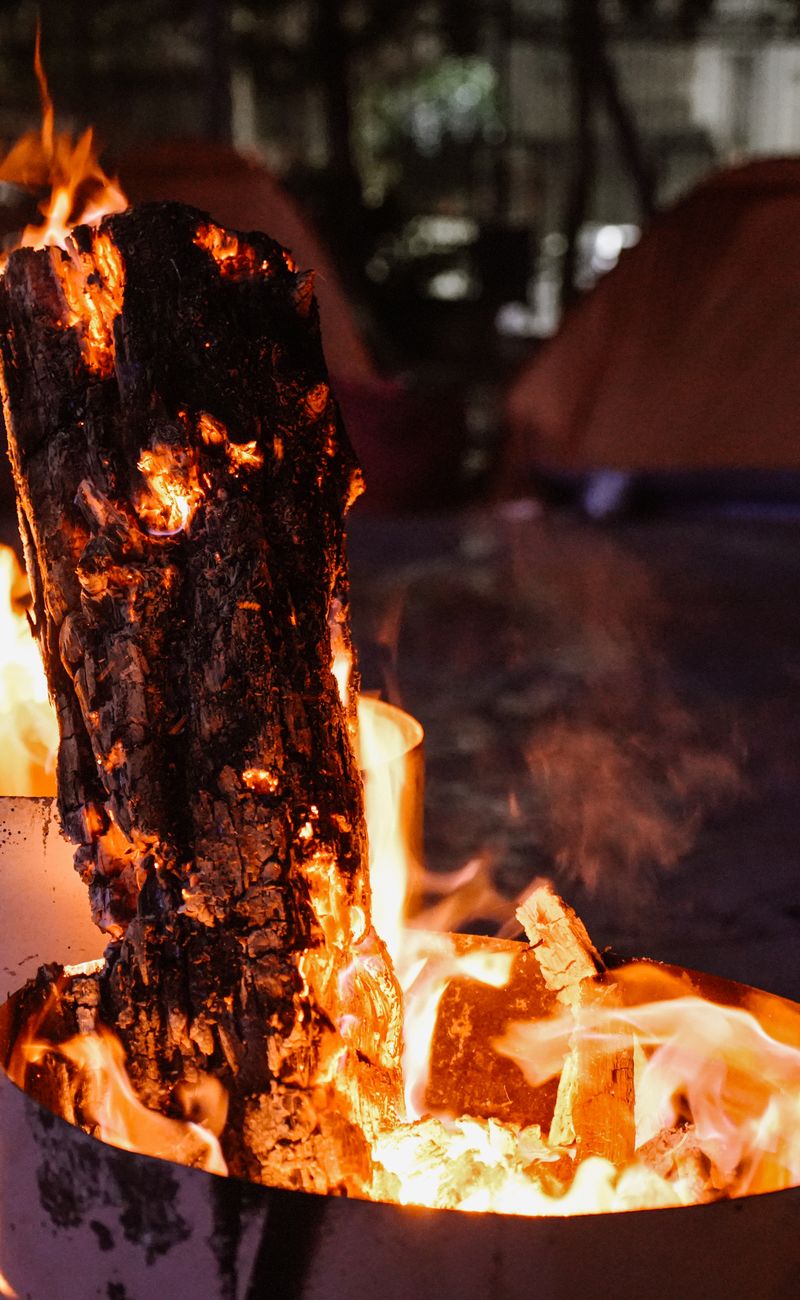
The single largest factor in falling asleep in the wilderness is temperature regulation. Your body needs to drop its core temperature to initiate sleep. This is not a suggestion. This is the mechanism. When your extremities are warm and your core is slightly cool, blood vessels in your hands and feet dilate, releasing heat, and your brain registers this as permission to enter sleep states. If you are cold, your body constricts those vessels and retains heat, keeping you in a state of low-level alertness. The protocol for temperature management in wilderness sleep is counterintuitive to most people. You should be slightly cool when you enter your sleeping bag, not warm. If you are too warm, you will not fall asleep efficiently. This means waiting until the temperature drops to comfortable levels before crawling into your sleep system. In summer conditions, this might mean staying outside your bag in just a base layer until the air temperature falls below sixty-five degrees, then entering the bag. In shoulder season, enter the bag earlier but keep the bag unzipped until you feel the initial coolness, then close it gradually as your body temperature rises. Site selection matters enormously for temperature. Cold air sinks. If you are sleeping in a valley or basin, you will be significantly colder than someone sleeping on a ridge or slope. In summer, valley floors hold cooler air and are preferable for temperature management. In shoulder season or winter, elevated sites keep you above the coldest air pooling below. If you are near water, humidity affects how your body perceives temperature. Dry air feels warmer at the same temperature than humid air. Account for these microclimate variables when selecting your sleep location. Light management in wilderness sleep is straightforward but requires intention. Your circadian system responds to light through specific photoreceptors in your eyes that are distinct from visual processing. These photoreceptors are maximally sensitive to blue-wavelength light and send direct signals to your suprachiasmatic nucleus, the master clock in your hypothalamus. Any artificial light after sunset delays your melatonin onset. This means no phone screens, no headlamps at full intensity, and certainly no is actually beneficial for circadian timing, not detrimental. The amber wavelength of firelight does not trigger the same circadian suppression as blue light. If you want to extend your evening slightly, a fire provides the warmth and ambient light without the sleep-disrupting effects of artificial illumination. Sound is the environmental variable most urban sleepers underestimate. Silence is not actually restful for everyone. Your nervous system has evolved to treat sudden sounds as potential threats. When you sleep in complete silence, your brain stays partially vigilant, waiting for the sound that indicates danger. White noise or nature sounds provide a consistent audio environment that masks sudden changes and allows your brain to stop monitoring for threats. The sound of water flowing over rocks is particularly effective because it is dynamic enough to mask sudden noises while being consistent enough to fade into background processing. If you are sleeping somewhere without consistent natural sound, a small portable white noise generator or a phone app playing nature sounds on low volume will improve your sleep onset latency and sleep quality.
The Mental Protocol: Closing the Alert Switch
Your brain is a threat detection system that never fully powers down. This is not a flaw. This is the operating system your ancestors used to survive. When you are sleeping somewhere new, whether that is a hotel room or a tent in the backcountry, your brain dedicates significant processing power to monitoring the environment for changes. This is why your first night in a new location is almost always poor sleep. It is not the mattress or the noise. It is your brain running threat assessment protocols that reduce sleep depth to ensure you can respond to danger. The mental protocol for wilderness sleep training addresses this directly. The goal is to signal to your limbic system that you are safe before you attempt to sleep. This is not visualization or meditation, though those tools can support the protocol. This is about environmental conditioning and physiological state management. The first step is establishing your sleep location as a safe zone. In the wilderness, this means spending time in your sleeping area during daylight hours. Cook your meals there. Sit in your chair. Read or write or rest in your sleep location while you are fully alert. Your brain is mapping this space as a known environment, not a novel one. By nightfall, your brain has already categorized this location as safe, and the threat assessment protocols run at lower intensity. The second step is physiological regulation through your vagus nerve. When your nervous system is in sympathetic dominant fight-or-flight mode, sleep is inaccessible. You cannot override this with willpower. You can shift to parasympathetic dominance through direct vagal stimulation. The most effective field method is extended exhalation breathing. When you exhale for longer than you inhale, your vagus nerve signals your heart to slow and your digestive system to activate. This is the opposite of the physiological state that prevents sleep. Before you lie down, perform ten rounds of breathing where you inhale for four counts and exhale for eight. Your heart rate will drop, your pupils will constrict, and your body will shift toward rest. The third step is progressive muscle relaxation performed in your sleeping bag before attempting sleep. This is not the clinical version you might find in stress management literature. This is the field-adapted version for cold environments. Starting from your toes and moving to your face, systematically tense each muscle group for five seconds, then release completely. The tension-release cycle teaches your nervous system to distinguish between contracted alert muscles and relaxed sleep-ready muscles. When you have completed the sequence, you will find that your body has settled into the ground in a way that feels different from the tension you carried while awake. This is the physical entry point to sleep.
The Wilderness Sleep Reset: A Complete Protocol
The full wilderness sleep training protocol requires a minimum of three consecutive nights outdoors to begin resetting your circadian biology. This is not an arbitrary number. Research on circadian rhythm entrainment shows that two full light-dark cycles are required to shift phase significantly, but three nights accounts for the first-night adjustment effect and ensures you experience at least one full night of properly entrained sleep. If you can extend to five or seven nights, the benefits compound. The protocol begins on day one with intentional morning light exposure. Wake without an alarm if possible, and immediately exit your shelter to receive sunlight. Your circadian system needs to see bright light in the first thirty minutes after waking to set the day's master clock. This light exposure establishes the timing for melatonin release twelve to fourteen hours later. If you wake at six in the morning and see sunlight immediately, your body will begin producing melatonin between six and eight in the evening. This is the target range for natural sleep onset. During the day, maintain activity but avoid overexertion in the late afternoon and evening. Your body temperature peaks in the late afternoon, and the subsequent drop in core temperature is one of the signals that initiates sleep onset. If you spike your temperature too close to bedtime through intense exercise, you will delay sleep onset. Moderate movement throughout the day is ideal. Walk. Swim. Do light climbing. Carry a pack. These activities support sleep by increasing adenosine buildup and providing proprioceptive input that your nervous system registers as physical work. In the two hours before you intend to sleep, begin environmental dimming. Reduce fire brightness. Stop using any artificial light sources. If you must read, use an amber headlamp at minimum brightness for no more than thirty minutes. Your brain needs the progressive darkness to begin melatonin synthesis. If you are in a location with a moon or stars, allow yourself to be in that low-level ambient light. It will not suppress melatonin the way artificial light does, and it signals to your brain that darkness is approaching. Enter your sleep system at the first sign of genuine drowsiness. Do not read or write or plan. If you lie awake for more than twenty minutes, get up, go outside, and wait until you feel genuine sleepiness returning. Trying to force sleep while your brain is still processing is counterproductive. It builds negative associations with your sleep location. Go back outside. Wait. Return to bed when your eyes are heavy. The morning after your first full wilderness sleep cycle, you will likely wake before the sun clears the horizon. This is not a problem. This is your circadian system recalibrating. Lie in your sleep system with your eyes closed, or exit quietly to watch the sunrise. Do not force yourself to sleep longer. Your body will extend sleep duration naturally as it builds homeostatic sleep debt from the increased sleep quality. After three nights, most people report not only falling asleep faster but experiencing significantly more deep sleep and waking with a sense of restfulness that they had forgotten was possible.
What You Are Actually Fixing
Wilderness sleep training is not about becoming someone who prefers sleeping on the ground. It is about reminding your nervous system what sleep is supposed to feel like. Your body knows how to produce the correct hormones at the correct times. Your body knows how to cycle through sleep stages appropriately. Your body knows when to wake and when to stay asleep. The problem is not your body's capability. The problem is the artificial environment you have surrounded yourself with, which provides contradictory signals that confuse every system involved in sleep regulation. When you sleep in the wilderness, you are not roughing it. You are not suffering for the aesthetic of being outdoors. You are giving your body the accurate environmental data it evolved to process. Light. Dark. Temperature fluctuation. Earth contact. Sound patterns that follow natural cycles. These inputs do not merely improve sleep. They restore the biological imperative that makes sleep restorative in the first place. Three nights is the beginning. The protocol scales with consistency. Sleep outdoors once a week for a month, and you will notice changes in your indoor sleep quality. Your body learns the pattern. It remembers what night is for. It begins to expect darkness and temperature drops and prepares for sleep accordingly, even when you are back in your temperature-controlled box. The wilderness did not fix your sleep. The wilderness taught your body how to fix its own sleep, and that knowledge persists.