Forest Sound Therapy for Better Sleep: Nature's Most Powerful Sleep Aid (2026)
Discover how forest soundscapes,birdsong, flowing water, and rustling leaves,act as natural sleep inducers. Learn the science behind nature audio therapy and how to use it for deeper, more restorative rest.
The Sound Environment Is the Missing Variable in Your Sleep Protocol
You have spent hundreds of dollars on a mattress. You have tried magnesium glycinate, glycine, apigenin, and every other compound the longevity crowd is pushing. You have blackout curtains, a cooling pad, and a white noise machine that produces the same sterile hiss it has been making for three years. And yet, your sleep remains mediocre. Your wake-ups are still fragmented. Your mornings still feel like a negotiation with your own nervous system.
The variable you keep ignoring is the sound environment. Not volume. Not noise cancellation. Sound quality. The specific frequencies, patterns, and biological meaning embedded in natural acoustic environments. Your white noise machine is coping. The recordings of rainfall you downloaded for free are barely adequate. What your nervous system actually needs is the acoustic signature of a living forest at night, and the difference between that and artificial sound masking is not a matter of preference. It is a matter of whether your parasympathetic nervous system recognizes safety.
Forest sound therapy is not a relaxation trend. It is the original sleep protocol. Humans evolved falling asleep to rustling leaves, distant water, and the layered chorus of nocturnal creatures. Your brain still expects this acoustic environment at night. When it does not receive it, fragmentation follows. This article covers why forest sounds work at a physiological level, which sounds matter most, how to build a practical protocol, and what the research actually supports versus what is pure wellness speculation.
What Forest Sounds Do to Your Nervous System at Night
The autonomic nervous system is always listening. Before you consciously register a sound, your brainstem has already categorized it as threat, neutral, or safety. This evaluation happens in milliseconds. It determines whether your heart rate stays low or spikes, whether your cortisol stays suppressed or begins to rise, whether you sink deeper into sleep architecture or remain in a shallow, easily disrupted state.
Forest sounds at night register as safety signals. Not because they are pleasant to listen to. Because they are biologically meaningful. The low-frequency patterns in moving water, the irregular rustling that indicates no large predator is approaching, the layered frequencies that mask sudden intrusive sounds without the startle response they would trigger in silence, all of these create an acoustic environment your nervous system interprets as low-threat. White noise and pink noise do some of this work, but they lack the informational complexity that keeps the brain engaged in a healthy way rather than numbed in a superficial way.
Research on natural sounds and the autonomic nervous system consistently shows what field experience confirms. Water sounds, especially flowing water at low volume, produce significant reductions in heart rate variability markers associated with sympathetic activation. Bird calls at dawn have been shown to facilitate cortisol awakening response in a beneficial direction, priming alertness without the stress activation of alarm sounds. Wind through foliage creates a sound masking effect that is broadband but irregular enough to prevent habituation. Once you habituate to white noise, it stops working. Wind through trees does not habituate because it is never exactly the same twice.
The delta is not subtle. Studies comparing natural sound environments to artificial sound masking show measurable differences in sleep onset latency, sleep efficiency percentage, and subjective sleep quality ratings. But the studies understate the real-world effect because laboratory conditions do not replicate the full sensory context of actually being in nature or having a high-quality recording played through actual speakers in your bedroom. Context matters. A recording played through laptop speakers is not forest sound therapy. It is a pale approximation.
The Hierarchy of Sleep-Promoting Forest Sounds
Not all natural sounds are equal for sleep purposes. The frequency profile matters. The temporal pattern matters. The presence or absence of certain elements matters. Here is the hierarchy as it actually exists, based on the combination of research and what people report when they actually use these sounds consistently.
Moving water sits at the top. Not crashing waves. Not thunder. Moving water. A stream, a river, light rain on foliage. The sound of water moving over rocks creates a frequency signature that occupies the 200 to 800 hertz range predominantly, with complex overtones that are non-repetitive. This frequency range is ideal for masking the mid-range sounds that tend to wake people, traffic rumble, a partner's breathing, sudden mechanical noises, without creating the monotony that leads to habituation. The bonus is that water sounds have strong associative conditioning. Most people have positive emotional associations with water, which accelerates the parasympathetic response. If you have ever fallen asleep next to a stream in the backcountry and woken up eight hours later feeling genuinely restored, you already know this.
Wind through trees occupies the second tier. The sound of wind moving through conifer needles versus deciduous leaves produces different frequency profiles, and individual preference matters here. Conifer wind tends to be higher frequency and more sibilant. Deciduous wind tends to be lower and more textured. Both work. The key is that it must be wind, not a recording of wind. A loop of wind sounds is worse than no sound at all because the brain detects the loop and the repetition breaks the illusion of safety. You need a recording that is long, non-looping, or a live source. Opening a window when there is actual wind outside is the gold standard. A recording of wind through a specific forest that you have visited and found restful will have stronger effect than a generic wind recording because of associative memory.
Night insects, specifically cricket and katydid chorus, occupy the third tier. This is region-dependent. In North America, the sound of Orthoptera chorus in summer is one of the most sleep-promoting sounds available because it has the right combination of steady-state presence with subtle variation. Crickets do not maintain exactly the same rhythm. They modulate based on temperature, competition, and other factors. The result is a sound that is consistent enough to mask without being monotonous and variable enough to remain novel. Katydid chorus has a slightly different frequency profile and tends to work better for people who find cricket sounds slightly too high-pitched. Winter removes this option in most climates, which is why the protocol needs to shift seasonally.
Bird sounds are more complicated for nighttime use. Most birds are diurnal. Their sounds during the day can facilitate sleep if used during napping. Their sounds at dusk can facilitate the sleep onset transition. But nocturnal bird sounds, primarily owl calls and the occasional night bird, are not sleep-promoting for most people. Some owl calls trigger a mild predator-detection response that fragments sleep architecture. The exception is the barn owl, whose vocalization profile is low enough and regular enough that many people find it non-disruptive. Pro tip: if you are recording your own forest sounds, avoid including owl calls unless you know they do not affect you.
Absence of sound, true silence, is not as good as people think for sleep. Complete silence triggers what is sometimes called the hunter's paradox. The human auditory system in silence becomes hypervigilant, scanning for threats. A completely silent bedroom at night is not the baseline your nervous system expects. It is a modern anomaly that creates low-level alertness. The goal is acoustic safety, not acoustic absence.
The Practical Protocol: Building Your Forest Sound Sleep Stack
The protocol has three layers: the primary sound source, the secondary masking layer, and the contextual integration. All three need to be present for maximum effect.
The primary sound source is moving water or wind, depending on what is available in high quality and what you respond to. The quality of the recording matters more than most people realize. A recording with poor dynamic range, excessive compression, or audible looping will undermine the entire protocol. You want recordings that were made in the field, not synthesized approximations. There are field recording communities where people share high-quality recordings from specific locations. Finding one from a forest you have actually been to strengthens the associative response significantly. If you have recordings from a personal trip, those are the best option.
Volume matters. The common mistake is playing the sounds too loud. Forest sound therapy works at low volume, roughly 30 to 45 decibels, which is the range of quiet conversation. The sounds should be present enough to fill the acoustic space and mask disruptive sounds, but not so present that they become the focus of attention. You should be able to hold a conversation at slightly elevated volume without straining, and you should not hear the sounds from outside your bedroom with the door closed. If you are using a smart speaker, the default volume is almost certainly too high. Set it to 25 to 35 percent and adjust from there.
The secondary masking layer handles the gaps. No recording is perfect. No live sound source is continuous. The secondary layer fills in the acoustic space during quiet moments to prevent the silence-detection response. This is where very low volume pink noise or brown noise comes in. Not white noise. Pink and brown noise are closer to the frequency profile of natural environments and do not trigger the same habituation. Set this at roughly 20 to 30 percent volume, just enough to be present when the primary source has quiet moments.
Contextual integration means the sounds need to be present during the sleep onset window and available throughout the night, but the brain needs a consistent association between the sound environment and sleep time. This means using the same recordings, played from the same source, at the same volume, every night for a minimum of two weeks before the full protocol effect stabilizes. The first nights will feel pleasant but not transformative. By the second and third week, your nervous system will begin to associate the specific acoustic signature with sleep onset, and the latency will drop noticeably.
For the first week, play the forest sounds for 30 minutes before your target bedtime as part of your evening wind-down. This builds the association during the transition period when cortisol is naturally declining. Continue playing through the night. Do not stop the sounds when you fall asleep. The nervous system continues monitoring the acoustic environment during sleep, and the presence of safety signals during the night reduces the frequency and duration of wake-ups.
Seasonal and Geographic Adjustments to the Protocol
Forest soundscapes change by season, and your protocol should change with them. The summer soundscape is dominated by insect chorus and the full range of water sounds. Summer nights have more ambient noise from wildlife, which is generally beneficial for the masking effect. Use this season to establish the deepest associations with water-dominant soundscapes.
Autumn brings wind-forward soundscapes. The sound of wind through dry leaves has a different character than wind through green foliage, slightly harsher, more percussive. This is not worse, just different. Many people find autumn wind sounds to be some of the most sleep-promoting available. Autumn is also when you want to start incorporating sounds from coniferous forests if you have access to them, as those trees maintain their needles through winter and provide a different acoustic texture when snow dampens other sounds.
Winter is the most challenging season for forest sound therapy in most climates. Insect chorus is absent. Water sources may be frozen. The soundscape becomes dominated by wind, especially in the absence of foliage. If you are in a cold climate, winter is when you want to lean heavily on high-quality recordings from other seasons or from different geographic regions. A recording of a winter forest with ice cracking on a frozen lake, light wind through bare branches, and distant owl calls can be profoundly sleep-promoting if you adjust volume and accept that it has a different character than summer sounds.
Spring is the transition back to water-dominant soundscapes as snowmelt raises stream levels and rainfall increases. Spring also brings bird chorus back into the evening hours. Be careful with spring bird sounds near dusk, as they can be alerting rather than sedating. The transition period around dawn and dusk in spring is when you want to be most conservative about sound selection.
Urban and suburban listeners face additional challenges. Traffic noise, sirens, and urban wildlife create an acoustic environment that is not compatible with the safety-signal framework. For city dwellers, the protocol requires stronger sound masking as a foundation layer before forest sounds become effective. Consider a white noise or pink noise base layer at low volume, then forest sounds on top at the volume you can tolerate without hearing the city. The goal is not to eliminate urban noise but to ensure it registers as background rather than threat.
The Field Test: Why Recordings Are Not the Same as the Real Thing
The honest limitation of forest sound therapy as implemented in most homes is that recordings are not the same as the real acoustic environment. Your nervous system knows the difference. A recording played through speakers creates an acoustic illusion that is convincing but not complete. The spatial cues are wrong. The dynamic range is compressed. The interaction between the sound and your room's acoustic properties is artificial.
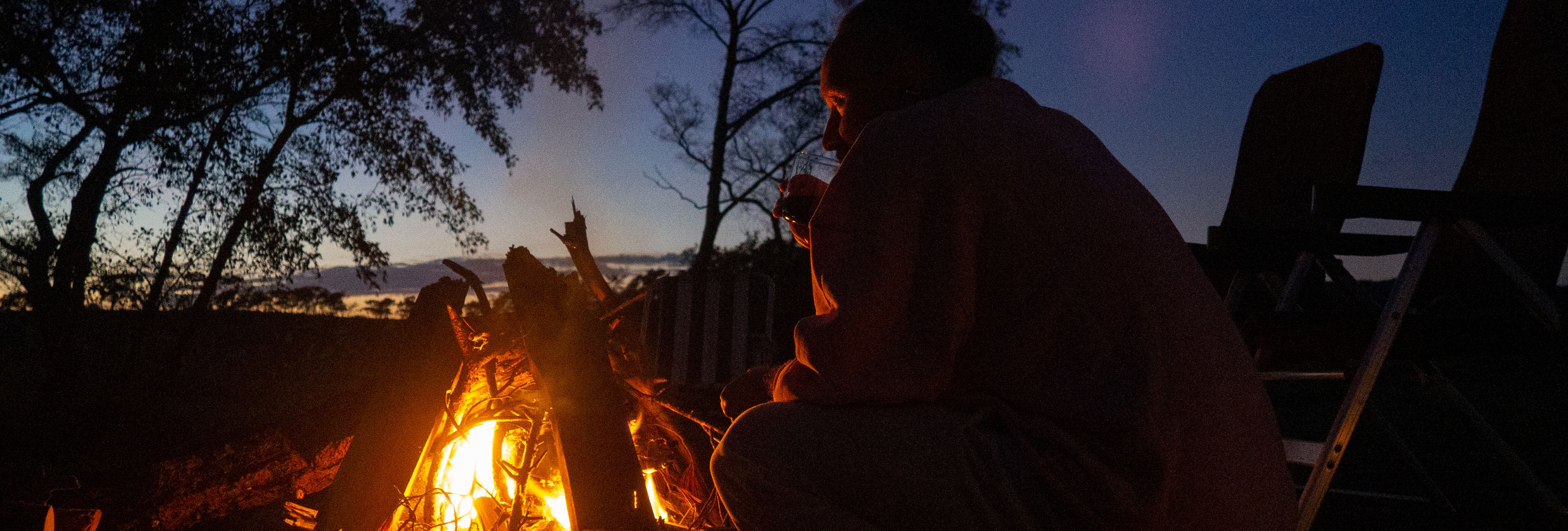
The actual protocol, the one that produces the most dramatic results, involves spending time in forests at night. Not every night. Not even every week. But regularly. A monthly overnight in a forest environment, with no headphones, no speakers, just the actual acoustic environment, resets the association between forest sounds and sleep safety in a way that makes the recording protocol more effective for the weeks that follow.
This is why people who regularly camp report that their sleep quality improves for weeks after a backcountry trip. The forest soundscape at night is so biologically meaningful that even a few nights of exposure creates a lasting recalibration of the nervous system's evaluation of natural sound environments. You are not just sleeping better because you are camping. You are sleeping better because your brain has reclassified what sounds mean.
If you have access to any forested area within driving distance, the protocol should include at minimum one overnight per month in that environment during the seasons when it is feasible. Not a day hike. An overnight with a shelter that allows you to hear the forest at night. A tent, a tarp, a hammock. The shelter type does not matter. The acoustic exposure does.
For those without access to regular forest exposure, the recording protocol remains highly effective. It is not copping to use recordings. It is working with the tools available. But understand what you are doing. You are using the acoustic signature of safety as a pharmaceutical. The recordings are the delivery mechanism. The effect is real. The mechanism is biological. And the protocol works better when you occasionally get the real thing.