Shinrin-Yoku (Forest Bathing) for Better Sleep: The Complete 2026 Protocol
Discover how forest bathing (Shinrin-yoku) optimizes your sleep quality naturally. This evidence-based guide covers forest bathing techniques, optimal timing, and how nature immersion reshapes your circadian rhythm for deeper, more restorative sleep.

Your Bedroom Cannot Compete With a Forest
You have tried blackout curtains. You have tried melatonin. You have tried white noise machines and magnesium glycinate and every sleep hygiene checklist ever published on the internet. And yet, your sleep remains mediocre. Here is the uncomfortable truth: you are trying to optimize a biological system that evolved over millions of years inside natural environments while living in concrete boxes filled with artificial light and synthetic materials. The forest is the original sleep protocol. Your ancestors slept under canopies of trees. Your circadian rhythm was calibrated by dappled sunlight filtering through leaves, by the temperature swings of a day spent outdoors, by the sounds of wind through branches and the smell of decomposing organic matter returning nutrients to the soil. Shinrin-yoku, the Japanese practice of intentional immersion in forests, is not a wellness trend. It is a homecoming. This is the complete 2026 protocol for using forest bathing to fix your sleep.
The research on shinrin-yoku is substantial enough that Japan established official forest therapy bases in the 1980s. Medical professionals there now prescribe forest immersion for everything from burnout to high blood pressure. The sleep benefits are not anecdotal. They are the result of measurable physiological changes that occur when humans spend intentional time among trees. Your cortisol levels drop. Your heart rate variability improves. Your parasympathetic nervous system, the rest-and-digest counterpart to the fight-or-flight response, takes dominance. These are not subjective feelings of relaxation. They are measurable shifts in your autonomic nervous system that directly translate to better sleep architecture, meaning more time in deep sleep and REM cycles where actual recovery happens. If you want to understand why this works, you need to understand what forests offer that your bedroom never will.
The Biology of Forest-Induced Sleep
Phytoncides are volatile organic compounds released by trees. These are the chemicals that give forests their distinctive smell. Pinene, limonene, cedrol. Your immune system recognizes these compounds as signals that you are in a healthy environment. When you breathe in phytoncides, your body responds by increasing the activity of natural killer cells, a type of white blood cell that hunts pathogens and abnormal cells. This immune boost comes with a significant side effect: reduced cortisol production. The same physiological cascade that makes you more disease-resistant also makes you calmer, more relaxed, and significantly more prepared for sleep. This is not magic. This is chemistry. Your body has been responding to forest air for the entirety of human evolution, and it still knows exactly what to do when you give it the right signals.
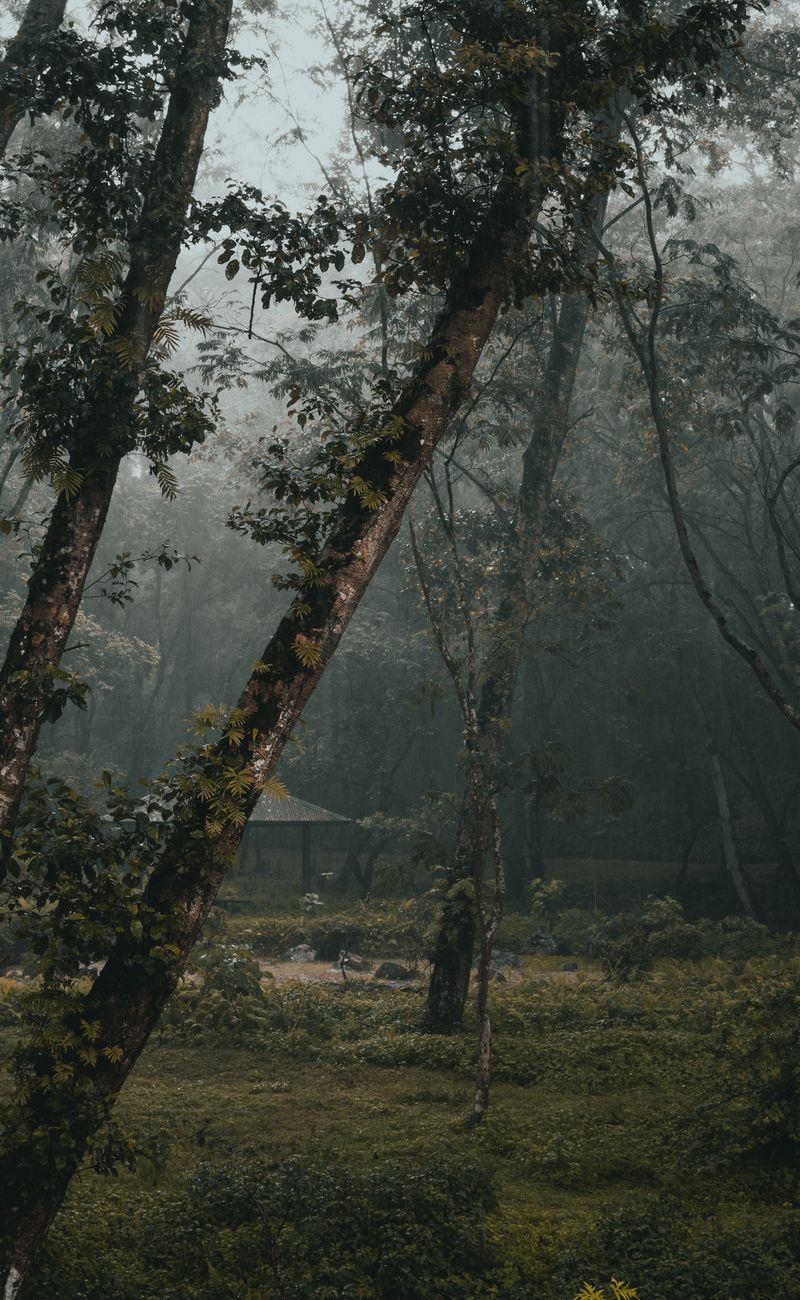
The visual environment of a forest matters more than most people realize. Your circadian system does not just respond to light and darkness. It responds to the entire visual field. The fractal patterns found in forests, the way branches organize themselves, the layered density of a healthy woodland, all of this provides a form of visual input that calms the nervous system in ways that urban environments cannot replicate. Research suggests that fractal patterns at specific complexity levels reduce stress markers in the brain. Forests are essentially optimized visual environments for human nervous system regulation. The jagged geometry of cityscapes, the harsh edges of screens, the uniform regularity of fluorescent lighting, none of these provide the input your visual system evolved to process. When you spend time in forests, you are giving your nervous system something it has been missing.
Natural environments also provide a sound environment that actively promotes sleep readiness. The sounds of a forest are not random noise. They are complex, ever-changing, non-threatening acoustic signals that occupy just enough attention to quiet the mind without demanding the focused alertness that urban soundscapes require. Birdsong, wind through leaves, the distant sound of water, these are all sounds that your auditory system categorizes as safe. Your brain can process them without triggering threat responses. The result is a gentle occupation of the attention that leaves the rest of the mind free to settle. This is the neurological foundation of why sleeping in nature often produces deeper, more restorative sleep than sleeping in any structure. The sounds themselves are part of the protocol.
The Complete Shinrin-Yoku Sleep Protocol
The protocol is not complicated, but it requires commitment to the practice over time. You cannot do one forest walk and expect your sleep to transform permanently. This is a practice that builds. Think of it as a supplement to your existing sleep hygiene rather than a replacement. The goal is to accumulate forest exposure so that your nervous system recalibrates toward parasympathetic dominance on a permanent basis.
Step one is timing. The most effective forest bathing sessions for sleep optimization occur in the late afternoon, approximately three to four hours before your target bedtime. This timing matters because your body begins producing melatonin as light decreases, and the forest immersion in late afternoon gives your cortisol levels time to drop before your natural melatonin rise begins. Morning forest bathing is also beneficial for circadian alignment, but if you are optimizing specifically for sleep, late afternoon sessions have the most direct impact on your sleep architecture that night. Do not skip morning sunlight exposure entirely. That is a different but equally important protocol. What you want here is two separate nature contacts per day when possible, morning sunlight on your skin and eyes, late afternoon forest immersion for nervous system downregulation.
Step two is sensory engagement. Shinrin-yoku is not hiking. You are not covering distance or reaching a summit. You are moving slowly through the forest with deliberate attention on your senses. Start by standing still for five minutes at the edge of a wooded area. Close your eyes. Breathe. Listen to the forest soundscape without trying to identify individual sounds. Feel the temperature variations on your skin as air moves through the canopy. Open your eyes and let your gaze soften rather than focusing on any single object. This initial still phase is critical. It signals to your nervous system that this is not a threatening environment requiring vigilance. It is a safe space for recovery.
Step three is slow movement. Begin walking at a pace slower than your normal walking speed. Your goal is to cover ground slowly enough that you notice everything you pass. Touch tree bark. Run your hands through undergrowth. Stop when something catches your attention and stay with it for a moment. This is not a meditative practice in the traditional sense, but it produces similar effects. Your attention is fully occupied by present-moment sensory input, which prevents the ruminating thought patterns that keep most people awake at night. The psychological phenomenon of rumination, the inability to stop replaying worries and plans, is significantly reduced during and after immersive forest experiences. This is not a placebo effect. It is a documented outcome of the specific combination of sensory inputs that forests provide.
Step four is breathing regulation. At some point during your forest bathing session, find a spot where you can sit or lean against a tree for ten to fifteen minutes. Practice slow, deliberate breathing. Four counts in, six counts out. This is not advanced breathwork. It is the simplest form of respiratory regulation that immediately activates your parasympathetic nervous system. The forest environment provides the safety signals that make this practice effective. You cannot achieve the same physiological state in your bedroom because your brain still categorizes your bedroom as the place where you try to sleep, which creates anticipatory anxiety that interferes with relaxation. The forest has no such associations for most people. Your nervous system can actually let go.
Step five is the transition. After your forest session, maintain the relaxed state during your walk back to your vehicle or home. Do not immediately check your phone or put in earbuds. Protect the neurological state you have cultivated for at least thirty minutes. When you arrive home, the goal is to maintain the calm rather than immediately re-stimulating. Eat a light meal. Take a cool shower if you sweat during the forest session. The temperature drop from a cool shower mimics the natural temperature drop that occurs at night and signals your body that sleep is approaching. Continue to avoid screens if possible, or at minimum use blue light filtering and avoid stimulating content.
The Camping Reset: Accelerating Your Forest Sleep Protocol
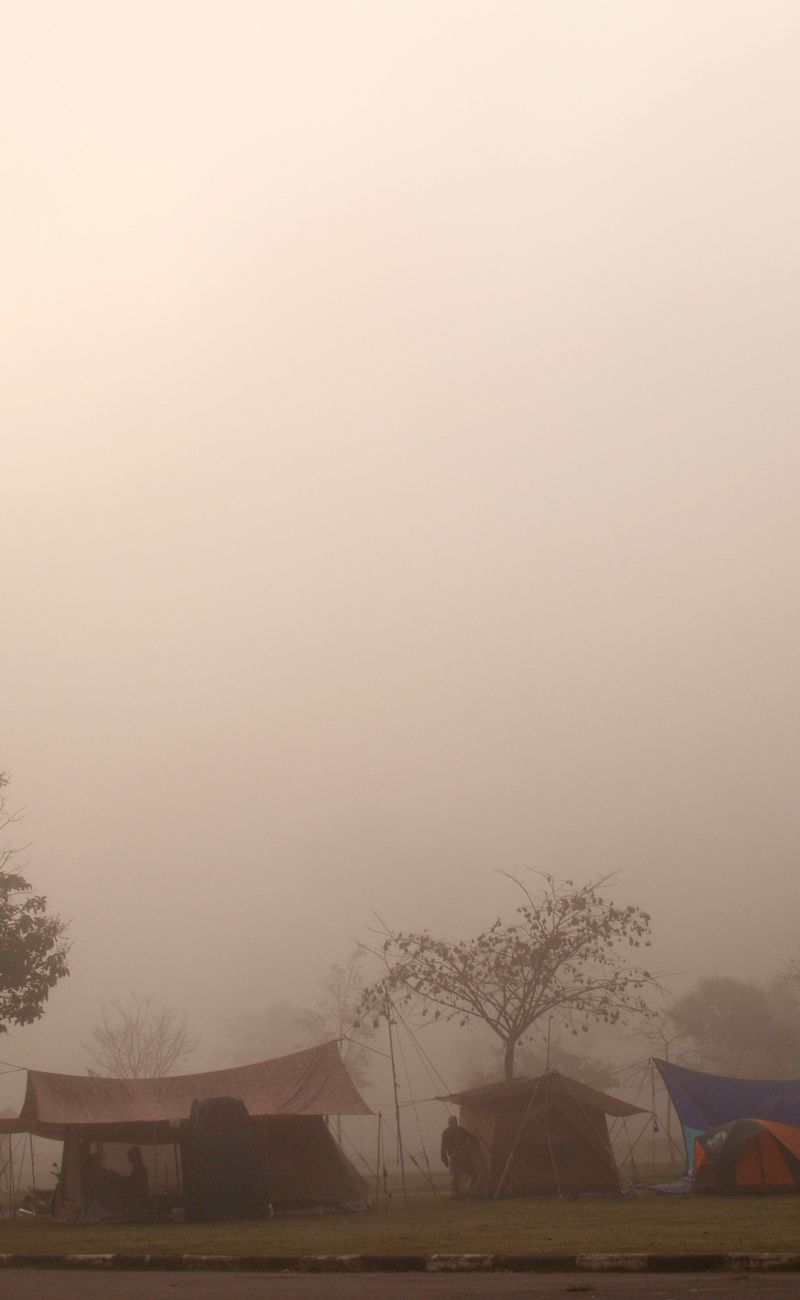
If your sleep is severely disrupted, a single daily forest walk will help but may not be enough to fully reset your system. The accelerated protocol involves spending consecutive nights sleeping outdoors in a forest environment. Three nights of sleeping under a forest canopy, even in warm weather, produces measurable changes in circadian rhythm markers. Your core body temperature drops more significantly at night when you sleep outdoors because of radiant cooling to the sky. Your exposure to electromagnetic fields drops to near zero. Your access to fresh forest air with phytoncides is maximized. The combination of these factors creates an environment that your nervous system recognizes as fundamentally correct, and it responds accordingly.
You do not need elaborate gear for this protocol. A hammock or a simple tarp setup is sufficient in appropriate weather. The key is removing as many artificial barriers between yourself and the natural environment as possible while maintaining safety and warmth. Sleep under the canopy, not in a cleared area. The overhead tree cover still allows you to see the sky through branches, which maintains the natural light cues your circadian system needs. You will likely find that you fall asleep faster, wake less during the night, and feel significantly more rested after the first full 24-hour cycle of forest immersion.
The three-night minimum exists because your circadian system does not reset immediately. It requires consecutive days of the correct environmental signals before it locks in new timing. This is the same reason that one night of camping is not enough for most travelers to eliminate jet lag. Your system needs time to recalibrate. Three nights in a forest gives most people a complete reset of their sleep-wake cycle even if they have been severely misaligned for months or years. After completing the three-night protocol, you will find that maintaining the daily forest bathing practice is sufficient to keep your system dialed in. The forest becomes the reference point your body returns to.
Urban Adaptation: Forest Bathing Without Forest Access
Not everyone has access to a forest. This is a fact. But the protocol adapts. Any green space provides partial benefit. Urban parks with mature trees, tree-lined streets, community gardens with significant plant density, all of these offer reduced but meaningful doses of the forest environment. The key variables are canopy density and species diversity. A monoculture of one tree species provides less benefit than a mixed woodland. A park with no tree canopy provides essentially no shinrin-yoku benefit regardless of how much green grass it contains. Prioritize parks with mature trees. Plant density matters more than park size.
When true forest access is limited to weekends or specific days, the protocol adjusts to maximize the benefit of limited exposure. On forest days, extend your sessions to two or three hours minimum. Cover more ground during that time than you would on a regular walk, but maintain the slow, sensory engagement that defines shinrin-yoku. On non-forest days, prioritize morning sunlight exposure, maintain cool bedroom temperatures, and use the memory of your last forest experience as a visualization anchor during your evening wind-down routine. Your nervous system cannot distinguish between actually being in a forest and vividly imagining a recent forest experience when the memory is fresh. This is not wishful thinking. This is the neurological principle of state-dependent memory and its effects on autonomic regulation.
The essential principle is that shinrin-yoku for sleep is not a luxury. It is infrastructure. If you are serious about optimizing your sleep, you need to build forest exposure into your weekly routine the same way you build in exercise and meal planning. The sleep industry wants you to believe that better sleep comes from products you can purchase. The forest tells you a different story. Better sleep comes from returning your biology to the environment it expects. That expectation was written over millions of years. It has not changed. Your bedroom has. The protocol is simple: go to the forest, stay there long enough, let your nervous system remember what it already knows.
Start this week. Not next month, not when you have more time. This week. Find the nearest green space with trees and spend one hour moving slowly through it with your attention on your senses. Do this for three consecutive days. Track your sleep. You will notice the difference. The forest has been waiting for you to remember.