Solo Camping for Mental Clarity: The Intentional Isolation Protocol
Solo camping is not about survivalism. It is about removing every external input so your nervous system can finally recalibrate. The intentional isolation protocol.
You have not been alone in years. Not really alone. You are always connected, always reachable, always consuming. Your phone is the first thing you check in the morning and the last thing you touch at night. You sleep within arm's reach of a device that delivers the entire attention economy directly into your visual cortex. Your nervous system has not had a single moment of true rest from external stimulation in months, possibly years. This is not an exaggeration. It is the default condition of modern life, and it is breaking your ability to think clearly.
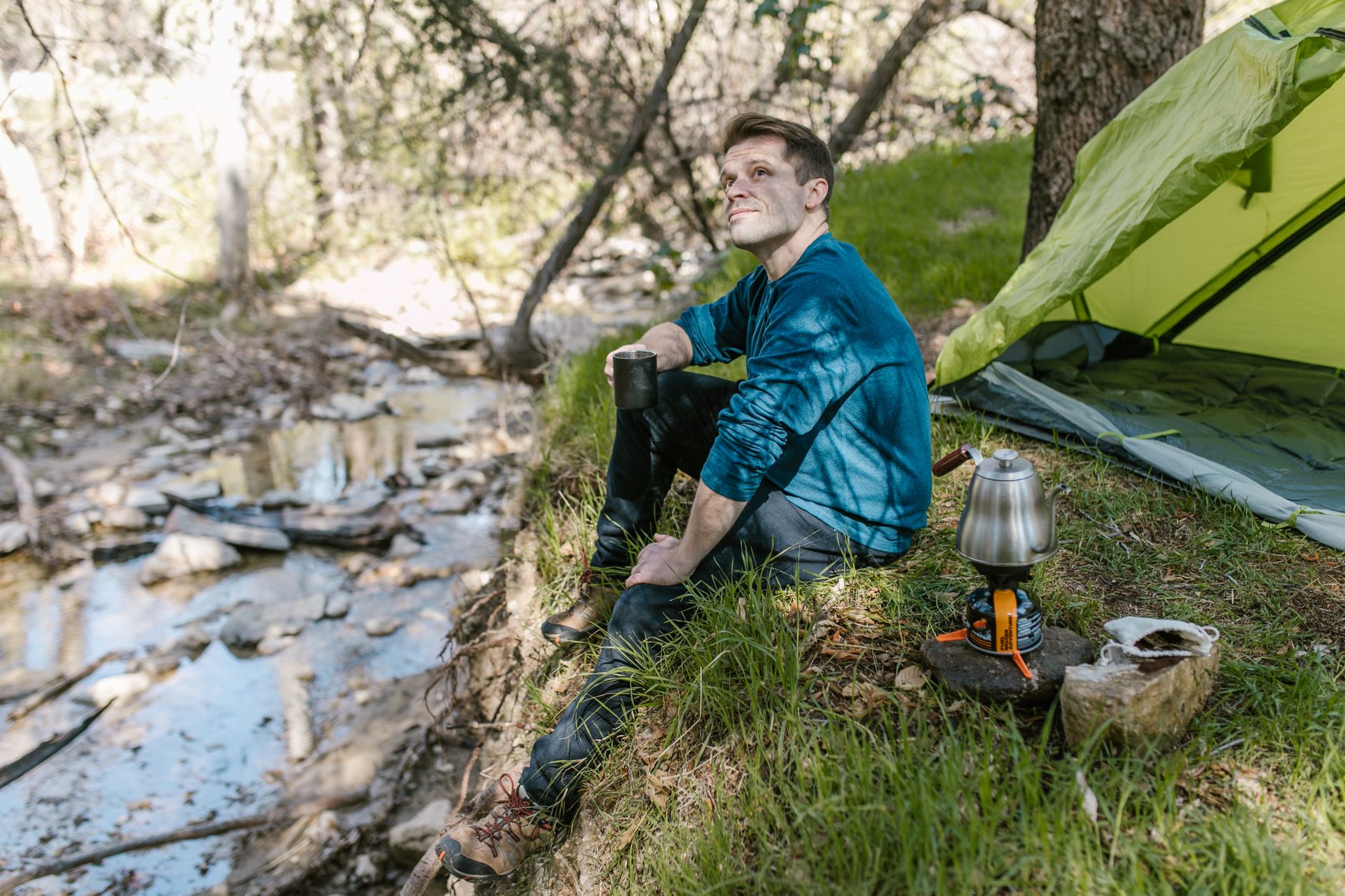
Solo camping is the antidote. Not the kind where you bring three friends and a Bluetooth speaker. The kind where you are alone, out of cell range, with nothing but the gear you carry and the terrain in front of you. This is intentional isolation, and it is one of the most effective protocols for mental recalibration available. It strips away every external input except the natural environment, which forces your brain to process signals it evolved to handle instead of signals designed to hijack its attention. The result is clarity. Not the caffeine-and-motivation kind that fades by noon. The kind that comes from a nervous system that has finally stopped bracing.
Why Solitude Is Not the Same as Loneliness
Most people conflate solitude with loneliness because they have never experienced the difference. Loneliness is the distress of wanting connection and not having it. Solitude is the relief of removing connection intentionally. They feel completely different in the body. Loneliness is tight, anxious, and restless. Solitude is spacious, calm, and alert. The distinction matters because the fear of loneliness is what prevents most people from ever trying solo camping. They imagine sitting by a fire feeling isolated and sad. In practice, the experience is almost the opposite. Within the first few hours, the anxiety of disconnection is replaced by a deep physical relaxation that most people have not felt since childhood.
The mechanism is straightforward. Your nervous system operates in two modes: sympathetic, which is fight or flight, and parasympathetic, which is rest and digest. Modern life keeps most people in a low-grade sympathetic state continuously. Notifications, deadlines, social comparison, news cycles, and the ambient anxiety of being reachable at all times maintain a baseline of cortisol and vigilance that your body interprets as chronic threat. Solo camping removes the triggers. No phone. No notifications. No social evaluation. No expectations from anyone. The nervous system detects the absence of threat signals and shifts into parasympathetic mode. This is not a hack. It is the natural state your body is trying to return to but cannot because the threat signals never stop.
The research on solitude and mental health supports this. Time spent alone in nature has been shown to reduce cortisol, lower resting heart rate, improve executive function, and increase creative problem solving. These are not small effects. They are measurable physiological changes that occur within 24 to 48 hours of removing external stimulation. The camping environment amplifies these effects because natural settings do not demand directed attention in the way urban environments do. The forest does not ask you to process information. It simply exists, and your brain is free to wander, consolidate, and recover.
The Protocol: How to Solo Camp for Mental Clarity
This is not a wilderness survival guide. You do not need to bushwhack into uncharted backcountry to get the benefits. A developed campground with a tent pad and a fire ring is sufficient for the first experience. What matters is the solitude, not the difficulty. The protocol has three phases: preparation, immersion, and reentry.
Preparation begins before you leave. Tell someone where you are going and when you plan to return. This is not optional. Solo camping without a safety contact is reckless, not brave. Choose a location within an hour or two of home so you can bail if the experience becomes genuinely distressing rather than just uncomfortable. Pack simple food that requires minimal preparation: nuts, dried fruit, cheese, tortillas, instant oatmeal. The goal is not to cook elaborate meals. The goal is to remove the need for decisions about food. Pack a journal and a pen. Do not pack a book. Reading is an external input. The point is to generate your own thoughts, not consume someone else's. Leave your phone in the car, turned off, or better yet, leave it at home entirely if your destination allows it.
Immersion is the experience itself. The first four to six hours will be uncomfortable. Your brain will crave stimulation. It will invent problems to solve. It will generate anxiety about things back home. This is withdrawal, and it is normal. The modern brain is addicted to input, and cutting the supply produces a predictable withdrawal response. Ride it out. By the second evening, the noise will start to thin. By the second morning, you will notice something different: your thoughts will slow down, become more deliberate, and feel more like your own. This is the clarity people describe after solo time in nature. It is not mystical. It is the absence of interference.
The journal is your primary tool during immersion. Write whatever comes to mind. Do not edit. Do not censor. The purpose is not to produce good writing. The purpose is to externalize the thoughts that are competing for attention inside your head. Once they are on paper, they stop circulating. This frees cognitive capacity for deeper processing. Most people are carrying dozens of unresolved thoughts at any given time, and they do not realize it until they sit still with no distractions and the thoughts all surface at once. Journal them out. Then let them go.
The Reentry: How to Return Without Losing the Gains
The most critical phase is reentry. After 48 to 72 hours of solitude, your nervous system is in a different state than it was when you left. Your baseline cortisol is lower. Your attention is more stable. Your sense of time has expanded. If you walk back into your normal life and immediately check your phone, open your laptop, and resume the notification cycle, you will erase the recalibration within hours. The body adapts to its environment. If the environment returns to chronic stimulation, the nervous system returns to chronic vigilance.
The reentry protocol is simple but non-negotiable. When you return home, do not check your phone for at least two hours. Unpack your gear. Take a shower. Eat a meal. Sit quietly. Let the transition happen gradually. When you do check your phone, do not open social media. Process messages and emails in batch, responding only to what is urgent. Leave the rest for the next day. For the following week, maintain a reduced notification profile. Turn off all non-essential alerts. Do not reinstall apps you deleted before the trip. The goal is to preserve as much of the recalibrated state as possible, knowing that some erosion is inevitable.
Over time, the benefits of a single solo camping trip fade. This is not a one-time intervention. It is a practice. Monthly or bimonthly solo excursions maintain the clarity and prevent the chronic sympathetic state from re-establishing itself. Think of it as nervous system maintenance, like changing the oil in an engine. You would not skip oil changes and then wonder why the engine seizes. Do not skip solitude and then wonder why your mind is foggy and your patience is short. The protocol is the solution. The solution requires consistency.
Practical Considerations and Safety
Solo camping is safe when done with basic precautions. Choose established campgrounds or well-traveled trails for your first few trips. Avoid solo backcountry in extreme weather, at high altitude, or in areas with significant wildlife risk until you have experience. Carry a basic first aid kit, a headlamp with spare batteries, and more water than you think you need. If you have a satellite communicator, bring it. These devices allow two-way messaging in areas without cell coverage and provide a safety net that makes the experience less about risk management and more about the mental protocol.
The duration matters. Anything less than 24 hours is too short for the withdrawal phase to pass. The sweet spot is 48 to 72 hours. This gives you one full day and two nights of genuine isolation. The first night is for withdrawal. The second day is for clarity. The second night is for integration. The third morning is for reentry planning. If you can only manage one night, do it. But aim for two. The difference between one night and two is not linear. It is the difference between a taste and a full experience.
You do not need to be a seasoned outdoorsperson to do this. You need a tent, a sleeping bag, food, water, and the willingness to sit with yourself without distractions. The gear does not need to be expensive. The location does not need to be remote. The only thing that needs to be absolute is the solitude. One phone check and the protocol is compromised. Treat it like a fast: the benefits depend entirely on the restriction. Cheat the restriction, lose the benefit. Commit to the restriction, and the clarity will find you.