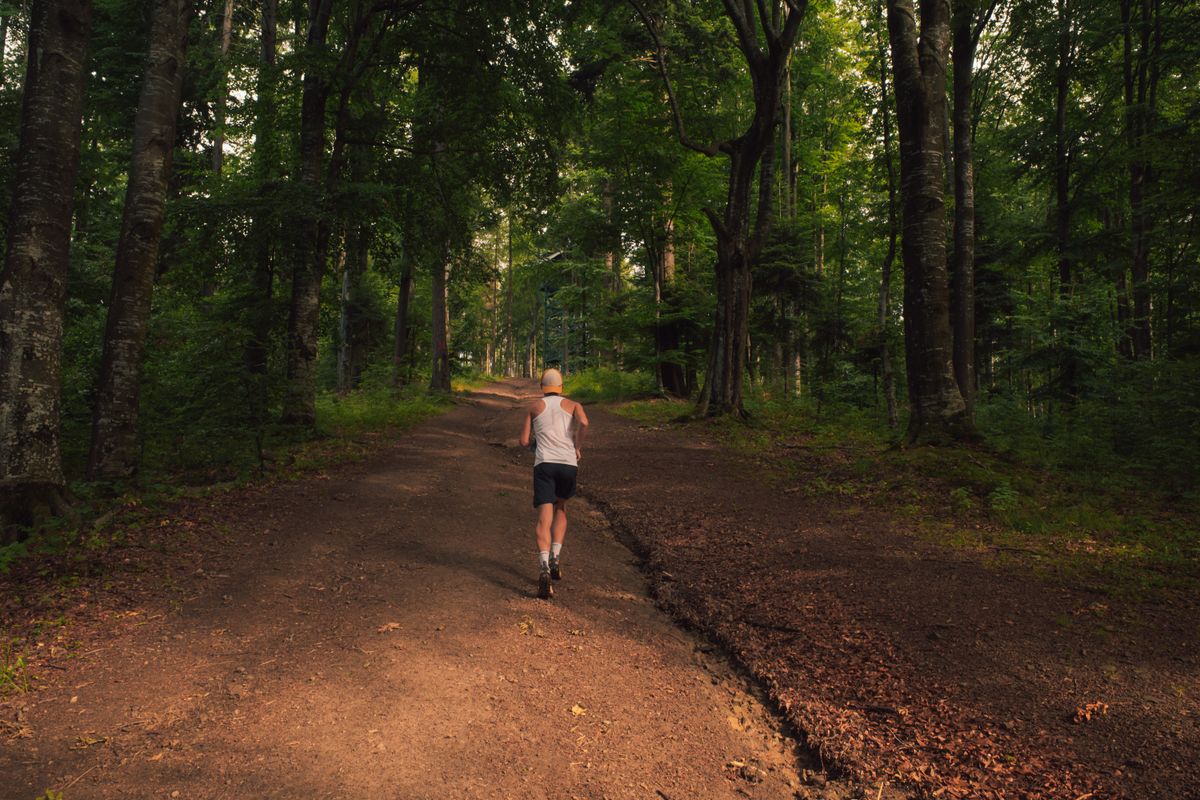
Nature Meditation Protocol: Anchor Your Mind in the Wild (2026)
Discover the nature meditation protocol that transforms forest environments into powerful anchors for your mind. This guide reveals how combining mindfulness with natural settings builds mental resilience, reduces anxiety, and enhances focus through evidence-backed techniques.
The Case Against Indoor Meditation
If you have been sitting cross-legged in a room with ambient music playing from a meditation app, you have been coping. That is not meditation. That is performance. You are trying to force your nervous system into a state of calm using artificial stimuli while your biology knows exactly what would actually work: direct contact with the living world outside your walls.
Nature meditation is not a trend. It is not some Instagram wellness aesthetic. It is the protocol that humans used for two hundred thousand years before someone decided that meditation required a subscription service and a noise-canceling room. Your nervous system did not evolve to find peace in a padded room with a diffuser running lavender oil. It evolved to find peace in forest clearings, beside moving water, on mountain ridgelines where the wind keeps your thoughts moving instead of spiraling.
The nature meditation protocol exists because most people are running factory settings on their stress response. They have never consciously engaged with natural environments in a structured way that signals safety to their biology. Once you understand what outdoor meditation actually does to your cortisol, your heart rate variability, and your parasympathetic state, you will not want to meditate anywhere else.
Why the Outdoor Environment Changes Everything
Your brain processes nature differently than it processes built environments. This is not opinion. This is neurobiology. The Japanese concept of shinrin-yoku, commonly translated as forest bathing, has been studied extensively in peer-reviewed research. Studies consistently show that time in forested environments reduces cortisol, lowers blood pressure, and improves markers of immune function compared to time in urban settings. The difference is not marginal. It is significant.
When you meditate indoors, you are asking your brain to focus on internal sensations or a guided narrative while your environment screams artificial. Fluorescent lights, HVAC sounds, the hum of a refrigerator, background notifications from devices you forgot to silence. All of it keeps your sympathetic nervous system partially engaged. You cannot fully enter a parasympathetic state when your environment is full of stimuli that signal human habitation and potential threat.
Outside, the environment operates on different frequencies. The sound of wind through leaves is not processed as threat. The movement of light through branches follows natural cycles that your circadian system recognizes as safe. The temperature variations, even subtle ones, keep your body present rather than drifting into the dissociative state that indoor meditation sometimes produces. You are not escaping your body outdoors. You are inhabiting it more fully.
The olfactory environment is another layer entirely. Forest air contains phytoncides, volatile organic compounds released by trees, primarily terpenes. These compounds have been linked to increased natural killer cell activity in research settings. In plain terms: you breathe in compounds that your immune system recognizes as information from the living world and responds to with activation. This does not happen in a room. The air in a room, even a clean one, contains human-generated compounds and recycled particles. Forest air is data. Room air is stagnation.
The Nature Meditation Protocol: Foundation
Before you start, understand this protocol has progression stages. Do not attempt advanced stages without completing foundation work first. Your ability to meditate outdoors depends on your ability to manage discomfort and maintain internal focus while external stimuli are present. Most people quit at the foundation stage because they have never practiced attention in a non-controlled environment.
Stage One: Sit and Observe Without Agenda
Find a location. Ideally, somewhere with moderate bio-diversity: not a manicured lawn, not a parking lot median. A forest edge, a meadow, a spot beside a river. Sit on the ground with a simple barrier between you and the earth if needed. A folded jacket works. You are not trying to be comfortable at first. You are trying to be present.
Set a timer for twenty minutes. Do not bring a phone. If you brought one, put it on airplane mode and bury it under your jacket. Look at your surroundings. Name five things you can see without moving your head. Name four things you can hear. Name three things you can physically feel: the ground beneath you, the air on your skin, the texture of what you are sitting on. Name two things you can smell. Name one thing you can taste.
This exercise grounds you in sensory reality. Most people who attempt meditation indoors have never learned to notice their surroundings. They jump immediately to breath work or mantras without establishing baseline sensory awareness. The five-four-three-two-one protocol is not spiritual. It is neurological. It pulls your attention out of narrative loops and into present sensory experience.
When thoughts arise, and they will, do not fight them. The common instruction to observe thoughts without attachment is correct but incomplete. You must also observe the environment continuously. Maintain awareness of the sky, the ground, the soundscape even as thoughts move through your mind. Your goal is to build the capacity to hold both internal and external awareness simultaneously.
Stage Two: Breath Synchronization with Natural Rhythms
After you can sit for twenty minutes without compulsion to check the time, move to stage two. Choose a natural rhythm to synchronize your breath with. The wind through leaves creates a variable rhythm that trains you to adapt rather than forcing a rigid pattern. Water moving over stones creates a rhythm that is faster in some sections and slower in others. Birdsong follows natural patterns that have no relationship to four-count breathing.
Begin by matching your exhale to the wind. When you feel the breeze move past you, exhale. When it pauses, pause. This sounds simple but it requires continuous attention. The wind does not follow a metronome. You have to stay listening. After ten minutes of this, shift to matching your breath to the movement of water or the rhythm of leaves if no wind is present. You are training yourself to follow external natural rhythms instead of imposing internal ones on the environment.
This stage is the bridge between basic outdoor sitting and true nature meditation. Most people never make it here because they stop going outside after the first few sessions. The first sessions feel uncomfortable. The ground is hard. Bugs show up. Temperature fluctuates. The protocol does not get easier. You get more capable. Continue.
Advanced Nature Meditation Techniques
Once foundation stages are solid, you can incorporate more active protocols. The following techniques are designed for practitioners who have spent at least three months building outdoor sitting capacity. Attempting these without foundation will produce frustration and reinforce the belief that indoor meditation is easier.
The Moving Meditation
Walking meditation in nature is not the same as hiking with a meditation app playing. True nature walking meditation requires you to eliminate external audio entirely. You walk slowly, deliberately, and use the rhythm of your footsteps as an anchor while maintaining environmental awareness.
Set a route of approximately one mile. Walk the entire distance without audio input, without checking your phone, without talking to anyone. Pay attention to each footfall. Feel the weight transfer from one foot to the other. Notice the texture changes in the ground surface. Keep your gaze at approximately thirty degrees downward, enough to maintain safety without staring at your feet.
The goal is to reach a state where the walking feels automatic but you are completely present in the physical experience of movement. Your thoughts may continue at their normal pace but they no longer pull you away from the immediate physical reality of your body moving through space. This state is achievable after consistent practice and produces effects on mental clarity that indoor sitting meditation rarely matches.
The Sit spot Protocol
Choose one location. Return to it regularly, ideally daily, for an extended period. This is a practice borrowed from tracking and nature awareness traditions. You are not visiting the location for meditation in the way you might visit a gym for exercise. You are building a relationship with a specific ecosystem over time.
Return to the same spot across seasons. Notice what changes. Notice what stays the same. Sit in the exact same spot and watch how the light moves through the canopy across weeks and months. This protocol develops a depth of environmental awareness that random outdoor sessions cannot produce. When you sit in the same place repeatedly, you begin to notice patterns. Birds return to specific perches. Water levels fluctuate. Plant cycles turn. You are no longer a visitor. You are a participant in a living system.
Meditation in this context is less about achieving a particular internal state and more about integrating into the landscape. The awareness that develops is different from the awareness produced by indoor practice. You start to notice things that you would have walked past without seeing. This noticing extends into your daily life. The cognitive effects of sit spot practice extend well beyond the time spent outdoors.
Temperature-Based Meditation
Intentional exposure to temperature variation while maintaining meditation practice is an advanced protocol that most people avoid. This is where the real work happens. Sitting in mild discomfort while maintaining internal calm is a skill that transfers directly to non-meditative life.
Begin in comfortable conditions. After you have established a baseline practice, begin extending your sessions into less comfortable conditions deliberately. Cold mornings. Hot afternoons. Windy afternoons when the temperature is dropping. The protocol is simple: sit and maintain your practice while the conditions create physical stress. Your nervous system learns to differentiate between physical stress and psychological stress. You stop interpreting temperature discomfort as threat. This changes how you respond to all forms of discomfort, including the discomfort of difficult thoughts and emotions.
Common Mistakes and What to Do Instead
The most common failure mode is treating outdoor meditation as a casual activity to be attempted when conditions are perfect. You will never develop capacity if you only meditate outdoors when you feel like it, when the weather is pleasant, when you are not rushed. Nature does not wait for your readiness. The protocol meets you where you are.
Another mistake is over-preparation. People show up to outdoor meditation with specialized mats, ergonomic supports, weather-appropriate gear for every condition, elaborate setups. Gear should serve the practice, not replace it. A simple groundsheet is sufficient for most conditions. If you need more than a simple barrier between you and the earth, you are avoiding the practice through comfort optimization. Sit with less. Learn more.
Guided meditation does not belong in nature meditation practice. Once you understand why indoor meditation is cope, you understand why guided audio in nature is just indoor meditation with better scenery. You are using external narration to manage your internal state instead of developing the capacity to manage it yourself. Nature meditation requires you to generate your own internal conditions without crutches. This is hard. That is the point.
Finally, do not measure success by how you feel during the session. Meditation quality is not determined by how peaceful you felt while sitting. The measure of a successful nature meditation session is how you function in the hours and days that follow. Improved reaction time to stress. Lower baseline anxiety. Increased ability to hold complex thoughts without losing your place. Better sleep that night. These are the metrics that matter.
The Protocol Is Simple. The Execution Is Not.
Nature meditation is not complicated. You go outside. You sit. You practice attention in the presence of the living world. The hard part is showing up consistently when showing up is uncomfortable. The hard part is staying present when your mind wants to manufacture reasons to cut the session short. The hard part is building a practice that does not depend on perfect conditions because perfect conditions do not exist in the wild.
Start today. Not next week. Not when you have better gear or a better location identified. Today. Twenty minutes in whatever outdoor space is accessible to you. Use the five-four-three-two-one protocol. Do not bring audio. Do not bring a phone unless it is off and buried. Establish the foundation. Build from there.
The people who have access to this protocol and do not use it are the people who still believe that the solution to their stress is something they can purchase or stream. The people who use it understand that nature meditation is not an enhancement to their practice. It is the practice itself, finally returned to the environment where it was designed to function.