Breathwork in Nature: Pranayama for Mental Clarity and Focus (2026)
Ancient pranayama breathing techniques amplified by nature immersion for unprecedented mental clarity, focus, and emotional balance.
Why Your Breathing Practice Is Incomplete Without Nature
You have been doing breathwork wrong. Not the technique itself, but the environment. Every studio class, every app tutorial, every YouTube guided session is teaching you pranayama in a sterile box with recycled air, fluorescent lighting, and the ambient stress of urban infrastructure. Your lungs deserve better than this. Your nervous system evolved over millennia in environments that made breathwork effortless: forests, mountains, rivers, open plains where the air actually carries what humans need to function.
Breathwork in nature is not a trend or a wellness aesthetic. It is the original protocol. Every ancient tradition that developed breath practices did so outdoors, in locations where the air quality, the visual field, the temperature variation, and the acoustic environment all contributed to the neurological effects practitioners sought. The Yoga Sutras were not written in a yoga studio. The Taoist breathing masters were not practicing in apartments. The shamans who developed breathwork across every continent did not sit on yoga mats.
What you are about to learn is the field-tested approach to pranayama that works when you actually get outside, touch grass, and let your respiratory system operate as it was designed to operate. This is not a stripped-down indoor practice adapted for outdoors. This is how breathwork was meant to be practiced, and once you understand why nature amplifies every technique, you will not go back to indoor sessions.
The Physiology of Outdoor Breathwork
Your lungs do not care about your intention or your meditation technique. They care about what they are actually breathing. Indoor air, even in clean studios, contains microplastics, off-gassing from synthetic materials, elevated carbon dioxide from human respiration, and a complete absence of the volatile organic compounds that trees and soil release into the air. These compounds, called phytoncides, are not marketing language. They are measurable, bioactive molecules that your immune system recognizes and responds to.
When you practice pranayama in a forest, you are breathing in these compounds alongside oxygen. Research consistently shows that time in forested environments reduces cortisol, lowers blood pressure, and activates the parasympathetic nervous system more effectively than time in urban environments. Your breathwork session becomes exponentially more powerful when the air itself is contributing to your nervous system regulation.
The temperature variation outdoors is another factor that indoor practice cannot replicate. Pranayama techniques that work with breath retention, alternate nostril breathing, or diaphragmatic expansion are all affected by ambient temperature. Cold air activates different neural pathways than warm air. Practice in a cool forest morning versus a warm afternoon and you will notice differences in how long you can comfortably hold your breath, how deep your inhales feel, and how quickly you transition from sympathetic activation to parasympathetic recovery. Your body reads the environmental data and adjusts your respiratory physiology accordingly.
The visual field matters too. Your autonomic nervous system reads open spaces differently than enclosed spaces. A forest with canopy above and open sightlines to the sky triggers different stress responses than a room with a ceiling. When you combine open sky awareness with conscious breathing, your vagal tone improves faster than it does in any enclosed environment. The horizon is your co-practitioner.
The Core Pranayama Protocols for Outdoor Practice
Nadi Shodhana, also called alternate nostril breathing, is the foundation technique that works exceptionally well in outdoor settings. The practice involves closing one nostril with your finger, inhaling through the other, then closing that nostril and exhaling through the first, alternating in a measured rhythm. In nature, this technique accomplishes something that indoor practice cannot: it synchronizes your respiratory rhythm with ambient sounds and air movement.
Begin your practice by sitting on the ground, not on a mat but directly on earth, stone, or fallen wood. Ground yourself physically before you begin the breathing pattern. Close your eyes and take three natural breaths to orient yourself to the environment. Notice the sounds around you. Notice the temperature on your skin. Notice what you smell. This sensory awareness is not separate from the practice. It is the practice.
Use your right hand in the Vishnu Mudra position: fold your index and middle fingers toward your palm. Your ring finger and pinky will close the left nostril, your thumb will close the right nostril. Inhale through the right nostril for four counts. Hold for four counts. Exhale through the left nostril for eight counts. Inhale through the left nostril for four counts. Hold for four counts. Exhale through the right nostril for eight counts. This completes one cycle. Practice for ten cycles minimum, twenty cycles if you have time.
The natural environment provides a reference point that indoor studios cannot. When you exhale, you are not just releasing breath into a room. You are releasing it into moving air, into a space where that breath interacts with wind, with tree movement, with the soundscape. Some practitioners report that this makes the exhale feel longer, deeper, more complete. Whether this is physiological or psychological does not matter. What matters is that the practice feels different outdoors, and that difference is the mechanism by which nature amplifies your breathwork.
Ujjayi breath, the ocean breath technique used in yoga practice, gains remarkable depth when practiced in environments with actual water nearby. The slight constriction in the back of your throat that creates the characteristic sound works in harmony with the auditory environment of a river, stream, or ocean. You are not practicing against silence or against the artificial sound of a studio. You are practicing with the original soundtrack that shaped human respiratory patterns over evolutionary time.
To practice Ujjayi outdoors, stand or sit with your spine vertical. Inhale through your nose and exhale through your nose while slightly contracting the muscles in your throat. The sound should be soft, continuous, and audible only to you and those nearby. Do not force it. The sound should feel like it is happening naturally, not performed. Walk forward as you practice this breath. Let the rhythm of your steps synchronize with your breath cycle. Inhale for four steps, exhale for six steps. This walking pranayama is one of the most powerful mental clarity protocols available, and it costs nothing except your willingness to get outside and move.
The Field Protocol: Breathwork Integrated with Nature Immersion
The most effective approach to breathwork in nature is not to practice breathing in isolation and then go for a walk. It is to integrate the breathing practice with movement through the landscape, with sensory engagement, with the natural environment actively participating in your session. This integrated approach is how the original practitioners developed these techniques, and it is why the protocols work better outdoors than in any studio setting.
The morning field protocol begins before sunrise. Wake early, dress appropriately for the conditions, and head outside to a location where you can see the sky. You want open space, not enclosed forest. Your first practice is simply standing and breathing for five minutes before the sun rises. This is not complicated. This is not guided. This is you, the sky, and your respiratory system recalibrating to actual environmental conditions rather than the climate-controlled fiction you have been living in.
Breathe naturally for five minutes. Watch the sky lighten. Let your nervous system register the changing light without looking at your phone or checking the time. Your breath will naturally deepen as the sky transitions from dark to light. This is not visualization or intention. This is your circadian system responding to real light cues through your respiratory rhythm. When the sun breaks the horizon, take three deep breaths and bow your head slightly. This is not worship. This is acknowledgment that you are practicing with the original source of energy and rhythm.
After the sunrise sequence, walk. Walk for twenty to thirty minutes minimum while practicing conscious breath cycles. Pick a natural rhythm for your inhales and exhales. Do not count unless you need structure to start. Let the terrain dictate your pace. Uphill terrain will naturally shorten your inhale and extend your exhale. Downhill terrain will let you take longer, deeper inhales. Let the land teach you your breath pattern rather than imposing a pattern onto the land.
The forest bathing protocol integrates breathwork with slow movement through woodland environments. Find a location with trees, preferably older growth if accessible, and walk until you find a spot where you feel drawn to stop. Stand there. Practice the four-part breath: inhale for four counts, hold for four counts, exhale for four counts, hold for four counts. This box breathing pattern regulates your autonomic nervous system and primes your brain for focused attention. Practice this for ten cycles before you begin any other breathwork.
After the box breathing sequence, take off your shoes. Stand on earth, rock, sand, or grass. Whatever is present in your immediate location. Walk in place slowly, feeling the ground beneath your feet. Practice Nadi Shodhana while standing barefoot. The combination of grounding, forest air, open sky above you, and conscious breathwork creates what field practitioners call the wild stack: a combination of environmental factors that amplify each other into something more powerful than any single element alone.
Advanced Breathwork Techniques for Experienced Practitioners
Once you have established a consistent outdoor practice, you can layer in techniques that require more physiological resilience. Kapalabhati, the skull-shining breath, is a rapid diaphragmatic pumping technique that clears the respiratory system and activates the sympathetic nervous system. Practice this in nature where the temperature differential and the visual openness allow your body to process the intense activation more effectively than indoors.
Sit or stand in an open area. Take a full inhale and a full exhale. Begin pumping your diaphragm rapidly, forcing exhalations through your nose while allowing automatic passive inhales. Do not control the inhale. Let your diaphragm return to its neutral position and let the air flow in naturally. Start with thirty pumps, rest for thirty seconds, repeat for three rounds. After the final round, take three deep natural breaths and notice how your mind feels. Most practitioners report heightened alertness, increased mental clarity, and a sense of reset that surpasses what coffee provides without the subsequent crash.
The exhale retention walk is an advanced protocol that builds respiratory resilience and mental fortitude simultaneously. Walk at a moderate pace on flat or slightly uphill terrain. Inhale for four steps. Hold your breath while continuing to walk for eight steps. Exhale completely and walk for two steps while emptying your lungs. Repeat this pattern for twenty minutes. The initial discomfort subsides after the first few cycles as your body adapts to the reduced oxygen environment. What remains is a heightened sense of presence, a quieting of mental chatter, and a physiological state that some practitioners describe as the original flow state.
Do not practice exhale retention walking alone on remote terrain until you have practiced it multiple times in accessible locations. The technique is safe when performed correctly, but the mental effects are disorienting for beginners. Practice in areas where you can sit down immediately if needed. Do not push through dizziness or confusion. If you feel lightheaded, stop, sit down, take normal breaths until your system stabilizes, then continue if you choose.
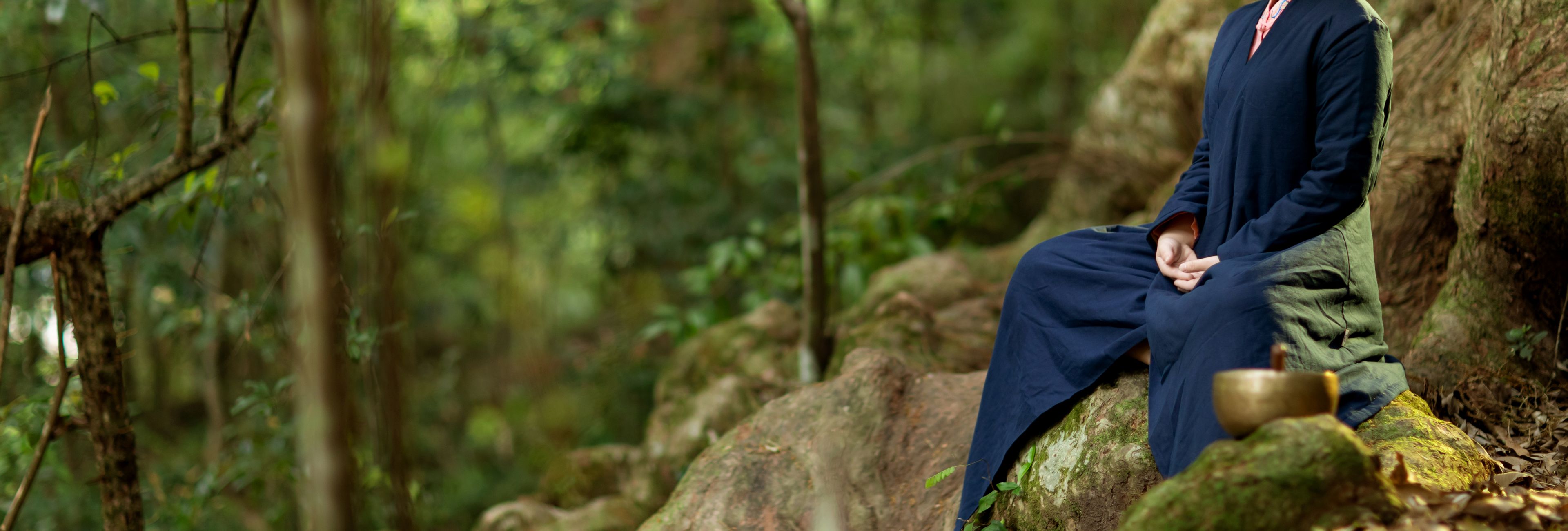
Coherent breathing, the technique of breathing at approximately five breaths per minute with equal inhale and exhale duration, is the most research-validated breathwork protocol for stress reduction and heart rate variability improvement. In nature, this technique reaches its maximum effectiveness because the parasympathetic activation from the natural environment combines with the coherent breath pattern to produce neurological effects that indoor practice cannot match. Practice coherent breathing while sitting on a rock overlooking a valley, a body of water, or any expansive natural vista. Let the vista support the breathing rhythm. Let the breathing rhythm support the vista. This is not metaphor. This is how your nervous system processes wide visual fields when it is in a parasympathetic state.
Making This Practice Sustainable
Breathwork in nature only works if you actually do it consistently. The protocol matters less than the repetition. Fifteen minutes of outdoor pranayama practiced daily will outperform a two-hour intensive session practiced once a week. Your nervous system needs regular exposure to recalibrate, and the environmental factors that amplify breathwork require ongoing contact to maintain their effect.
Build the practice into your routine rather than treating it as a separate activity. Morning breathwork is the most effective starting point because it resets your autonomic state before the day's demands begin. If you cannot practice outdoors every morning due to weather or schedule, practice near a window with open air access, but prioritize getting outside whenever conditions allow. The days you practice in actual nature will accumulate as your baseline respiratory capacity increases and your stress tolerance improves.
Do not wait for perfect conditions. Rain, cold, and wind are not obstacles to outdoor breathwork. They are additional environmental factors that amplify the practice when you engage with them consciously. Practice in rain and you learn to breathe through discomfort. Practice in cold and you learn to regulate your internal temperature through breath alone. Practice in wind and you learn to work with variable air pressure rather than against it. Every condition teaches your respiratory system something that indoor practice cannot.
Your breath has been with you since your first moment outside the womb. It will be with you until your last moment. Learning to use it consciously in nature is not a luxury or an enhancement. It is a return to the original operating system that humans evolved to function within. The techniques are available. The environment is available. The only remaining variable is your willingness to step outside and begin.