4-7-8 Breathing in Nature: Forest Breathing Protocol for Anxiety (2026)
Discover how combining the 4-7-8 breathing technique with forest environments creates powerful anxiety relief and mental clarity through this science-backed nature breathwork protocol.

The Problem With Breathing in Buildings
Your anxiety is running on fumes. Every morning you wake up and immediately reach for your phone. The first breath you take is recycled air from a sealed bedroom with blackout curtains blocking any hint of natural light. You are already dysregulated before you have even gotten out of bed. The standard approach to managing anxiety through breathing exercises is almost always practiced indoors, often in rooms with poor air quality, artificial lighting, and zero connection to the natural world. You are trying to hack your nervous system while simultaneously depriving it of the exact inputs it evolved to regulate itself with. This is backwards. The 4-7-8 breathing technique is a legitimate protocol for activating your parasympathetic nervous system, but when you practice it in the forest rather than a stuffy bedroom, the effect is multiplicative. This is the forest breathing protocol, and it is how you actually fix your anxiety response.
What the 4-7-8 Technique Actually Does
The 4-7-8 breathing method was developed by Dr. Andrew Weil, and it is based on ancient yogic breathing practices known as pranayama. The mechanism is straightforward. You breathe in through your nose for 4 counts, hold your breath for 7 counts, and exhale completely through your mouth for 8 counts. The extended exhale combined with the breath hold creates a physiological state that directly counteracts the sympathetic fight or flight response. When you hold your breath after a full inhalation, you allow oxygen to saturate your blood fully before releasing it. When you exhale for 8 counts, you empty your lungs more completely than you do in normal breathing, which stimulates the vagus nerve and signals your brain that the threat has passed. This is not mysticism. This is respiratory physiology. The vagus nerve runs from your brainstem down through your diaphragm, and prolonged exhalations directly activate its parasympathetic function. Research on pranayama breathing techniques consistently shows reductions in cortisol, decreases in heart rate variability linked to stress, and subjective reports of reduced anxiety. The protocol works. The question is where you practice it.
Why Nature Multiplies the Effect
Practicing 4-7-8 breathing in your living room is better than not practicing it at all. Practicing it in a forest is categorically different, and the difference is not psychosomatic. Trees release phytoncides, which are volatile organic compounds that have measurable effects on human immune function and stress hormones. When you breathe deeply among trees, you are inhaling these compounds alongside your breathwork protocol. Research on forest bathing, known as shinrin-yoku in Japan, has documented increases in natural killer cell activity, reductions in cortisol, and improvements in mood metrics after time spent in forested environments. The visual field matters too. Your autonomic nervous system responds to visual complexity. A forest canopy provides infinite points of visual focus, which prevents the kind of rigid fixation that occurs when you stare at a wall or a ceiling during breathing exercises. Your eyes do not strain. Your gaze rests naturally on a dappled green environment that your nervous system recognizes as non-threatening because it is the environment humans evolved in. Urban environments, by contrast, are full of sharp angles, harsh edges, and constant motion that keeps your sympathetic nervous system mildly activated even when you are sitting still. Add in the auditory component. Forests do not produce anxiety-inducing noise. They produce birdsong, wind through leaves, and running water. These sounds activate different neural pathways than traffic noise or human voices, and they are specifically associated with parasympathetic nervous system activation in the research literature. The combination of phytoncides, visual softness, natural sounds, and fresh air moving through your lungs while you practice 4-7-8 breathing creates a stack that indoor practice cannot replicate.
The Forest Breathing Protocol: Setup
You need a location that is genuinely treed. A city park with a few scattered trees will work in a pinch, but the protocol is more effective the more forest density you have access to. Look for areas with older trees, minimal foot traffic, and ideally some water nearby. Streams, rivers, and small waterfalls add an auditory element that accelerates parasympathetic activation. If you live in an urban environment and have limited access to forests, choose the greenest space available and accept that the effect will be somewhat attenuated. Partial nature exposure is still better than none. The time of day matters. Early morning, approximately one to two hours after sunrise, is optimal. Air quality is highest, human noise is lowest, and the light quality activates your circadian system in a way that supports the anxiety-reducing effect of the protocol. Late afternoon works well too, particularly if you can time your session to end around sunset. Avoid practicing during the hottest part of the day unless you are in a densely shaded forest. Heat stress activates the sympathetic nervous system and works against your goal.
Before you begin the breathing protocol, you need to transition. Most people rush into breathwork without properly arriving in the space, which means they are still mentally processing their commute, their tasks, or their worries while they begin the technique. The forest breathing protocol begins with ten minutes of sensory immersion. Find a spot where you can stand or sit comfortably. You are going to spend ten minutes doing nothing but experiencing your environment through your senses. Look at the light filtering through leaves. Listen to every distinct sound you can identify. Feel the air moving across your skin. Smell the forest. Do not name what you see. Do not think about what you need to do afterward. Just observe. This sensory immersion period is not optional. It is the foundation that makes the 4-7-8 breathing more effective by calming the cognitive noise in your mind before you begin the controlled breathing.
The Forest Breathing Protocol: Practice
After the sensory immersion period, find a seat. A fallen log, a flat rock, or a sitting pad on the forest floor all work. The goal is to be comfortable enough to maintain stillness for the practice duration, which is twenty minutes minimum for the full protocol. Sit with your spine straight but not rigid. Your diaphragm needs room to move, and slumping compresses it. Place your hands on your knees or in your lap, whatever feels natural. Close your eyes or soften your gaze downward if you find closed eyes disorienting. Many practitioners prefer a soft, downward gaze with eyes half-closed, which maintains some environmental awareness while reducing visual stimulation.
Begin with a natural breath. Do not start the count immediately. Take two or three cycles of breathing exactly as your body wants to breathe. Notice your breath. Notice any tension you are holding. Notice the sounds around you. This breath awareness phase should last about one minute before you begin the structured protocol.
Now begin the 4-7-8 cycle. Inhale through your nose for a count of 4. You are not trying to force maximum lung capacity. You are breathing at about seventy percent of your maximum depth, which is more sustainable for twenty minutes of practice. Hold your breath at the top of the inhalation for a count of 7. Do not strain. If 7 feels too long, start with 5 and build up over days or weeks. The hold should be comfortable, not labored. Exhale completely through your mouth for a count of 8. The exhale should be audible if you are doing it correctly, a gentle whoosh of air leaving your lungs. You are not trying to push air out forcefully. You are allowing gravity and the natural recoil of your lungs to empty them over 8 counts.
Repeat this cycle for twenty minutes minimum. If you can extend to thirty or forty minutes, the effects compound. The first few cycles feel strange because you are consciously controlling a system that normally runs on autopilot. By the fifth or sixth cycle, your nervous system begins to shift. You will feel warmth spreading through your extremities, which is a sign of parasympathetic activation and peripheral vasodilation. Your jaw may unclench. Your shoulders may drop. These are physiological markers, not placebos. Your body is responding to the extended exhale and the breath holds by downregulating your stress response.
After twenty minutes, do not rush to open your eyes and check your phone. Sit with your eyes closed or your gaze soft for five additional minutes. Let your breathing return to natural rhythm. Notice how your body feels different than when you began. This integration period is where much of the neurological recalibration occurs. Standing up immediately after a long breathwork session and reaching for your phone reverses the effect before it has finished processing.
Stacking Protocols for Maximum Anxiety Reduction
The forest breathing protocol can be enhanced by combining it with other nature-based protocols. Cold water exposure before the breathing practice accelerates the parasympathetic shift. If you have access to a cold river, lake, or ocean near your forest location, a brief immersion of two to five minutes before you begin the breathwork creates a hard reset of your nervous system. The cold exposure activates the mammalian dive reflex, which dramatically slows your heart rate and primes your vagus nerve. The subsequent 4-7-8 breathing then builds on that foundation.
Earthing, or direct skin contact with the ground, amplifies the effect as well. If your forest location allows it, remove your shoes and stand barefoot on the earth for five minutes before you begin the seated practice. The research on earthing is still emerging, but the anecdotal reports from practitioners consistently describe a grounding sensation that supports emotional regulation. Whether the mechanism is electrical, microbial, or simply the tactile comfort of natural surfaces, the effect is present.
Combining the forest breathing protocol with light physical movement afterward extends the benefits. After your seated practice, take a slow walk through the forest for fifteen to twenty minutes. This combines the breathwork benefits with gentle movement, which stimulates lymphatic circulation and dopamine release, without the cortisol spike of intense exercise. The walking should be slow enough that you can maintain the sensory awareness you cultivated in the immersion phase.
Advanced Practice: Extending and Deepening
Once you have established a baseline practice of twenty minutes, you can extend the protocol for more significant effects. Experienced practitioners report that forty-five to sixty minute sessions produce states of deep calm that last for days. The mechanism appears to be cumulative. Each cycle of 4-7-8 breathing builds on the previous one, and extended practice allows your nervous system to complete a full transition from sympathetic to parasympathetic dominance.
Some practitioners introduce visualization during the hold phase of the breath cycle. After inhaling for 4 counts and holding for 7, they visualize the oxygenated blood moving through their body before exhaling on the 8 count. This is not necessary for the physiological mechanism to work, but it can support the practice for people who find their minds wandering during the hold phase. Focus on something neutral, such as the feeling of your feet on the ground or the sound of wind in the canopy above you.
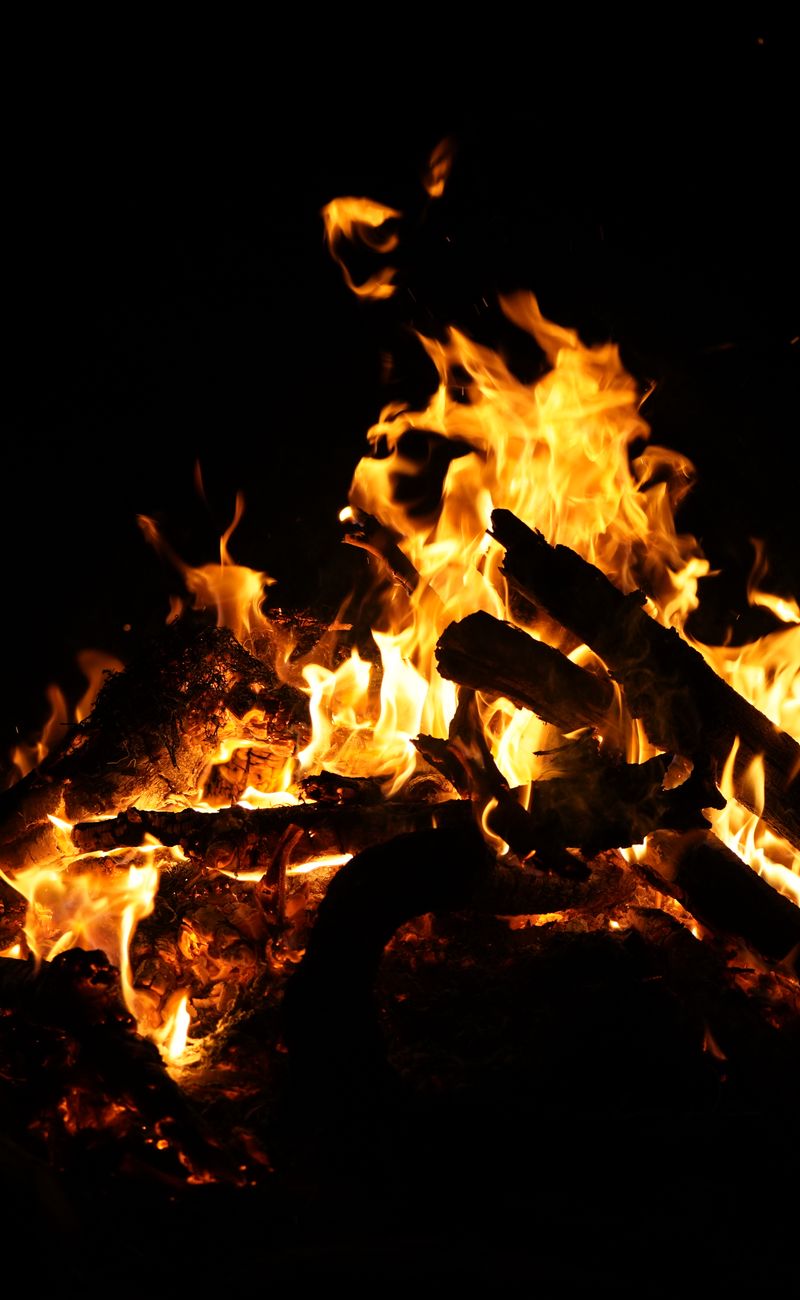
Nighttime forest breathing adds another dimension to the practice. Practicing the 4-7-8 protocol after sunset in a forest location creates an experience that is distinctly different from daytime practice. The absence of artificial light, combined with the sounds of a nocturnal forest, activates your parasympathetic system even more strongly. The darkness removes visual reference points and creates a kind of sensory surrender that daytime practice cannot replicate. This is advanced work. Only practice in darkness if you are familiar with the location and can navigate safely. Solo nighttime forest breathing should not be attempted by beginners. Build your daytime practice for several weeks first.
Regularity matters more than duration. A twenty minute session practiced daily will produce better long-term results than hour-long sessions attempted twice a week. Your nervous system needs consistent signals to recalibrate. Think of it like training. You would not expect to get fit by going to the gym once per week for two hours. The same principle applies to breathwork. The daily protocol, even on days when you feel fine, prevents the accumulation of anxiety that builds when you skip practice for weeks and then try to manage a crisis with a single session.
The Field Manual for Anxiety
Your anxiety did not develop overnight, and it will not disappear with a single forest breathing session. But the protocol works if you commit to it. Twenty minutes in the trees, practicing 4-7-8 breathing with proper sensory immersion, repeated daily for thirty days, will produce measurable changes in your baseline stress response. You will notice that situations that previously triggered anxiety no longer do. You will notice that recovery from stress is faster. You will notice that you sleep better and wake up more refreshed. These are not placebo effects. These are the documented outcomes of combining controlled breathing with nature exposure.
The people who struggle with this protocol are the ones who never give it a real chance. They practice once, in a park with noise pollution and bad cell reception, and conclude that it does not work. They go back to medication or supplements or whatever else they were using before. The protocol is not magic. It is a skill, and like any skill, it requires practice and commitment. Get outside. Find some trees. Breathe. The anxiety you carry is not who you are. It is a dysregulation that responds to the right inputs. The forest is those inputs. The 4-7-8 breathing is the mechanism. Together they are the most effective anxiety protocol you have access to right now, and it costs you nothing except a willingness to leave the building.