Outdoor Bodyweight Training: Natural Strength Without a Gym (2026)
Build real functional strength using nature as your gym with this complete outdoor bodyweight training guide. No equipment needed,just your body and the wild.

The Gym Is a Coping Mechanism
Your ancestors did not have squat racks. They had hills, rocks, logs, and the terrain they were born into. Every major movement pattern your body is capable of was developed through outdoor physical activity, not through weight machines designed to isolate muscles in ways the human body was never meant to move. If you have been paying $50 to $200 per month for a climate-controlled room full of iron to do something your body could do on a hillside, you have been making the problem worse and calling it a solution.
Outdoor bodyweight training is not a compromise. It is not a fallback when you cannot afford a gym membership. It is the original strength protocol, and when executed with intention, it produces functional strength that translates directly to real-world performance. The kind of strength that lets you carry a heavy pack up a steep trail, scramble over boulders, or handle unexpected physical demands without having a panic attack about whether you hit your weekly leg day.
This article is the complete protocol for building real strength outdoors. Not the performative kind where you do pushups in a park and call yourself a trail athlete. The actual thing. Progressive overload, structured programming, movement mastery, and the natural variables that make outdoor training superior to any iron temple you have been paying to enter.
Why Your Body Prefers the Wild
Every surface you train on outdoors has variability that a gym floor will never provide. A tree branch is not a pull-up bar. It has texture, slight give, and angles that force your grip to adapt. A hillside is not a stair climber. It has pitch, uneven terrain, and wind resistance that changes your workload second by second. Concrete ledges, park benches, playground structures, boulders, and fallen logs all offer training variables that cannot be replicated in a controlled indoor environment.
The human neuromuscular system was designed to navigate natural environments. When you train exclusively on flat, stable, predictable surfaces, you are essentially teaching your body to ignore the proprioceptive feedback systems that govern movement quality, joint stability, and injury prevention. Athletes who train exclusively in gyms often have impressive numbers on specific lifts but move like robots in dynamic environments. They have strength in a vacuum but not the kind that transfers.
Outdoor bodyweight training also eliminates the psychological ceiling that gyms create. When you are doing sets of pull-ups on a bar inside, your body knows there are exactly 12 reps available before you need to rest. When you are hanging from a tree branch, your body does not know how many reps are possible. You work until you cannot work anymore, and that is a fundamentally different stimulus. The ego-driven portion of your brain that counts reps in a gym goes silent in the wild, and the physical work speaks for itself.
Temperature exposure, sunlight, and fresh air also add physiological variables that gym training cannot replicate. Training in the cold builds mental resilience and activates brown adipose tissue. Training in the heat improves cardiovascular capacity and sweat efficiency. Training in the wind creates a constant load variable that your stabilizer muscles must manage. The natural environment is not a neutral backdrop for your workout. It is an active variable that shapes your adaptation.
Foundational Movements for Outdoor Bodyweight Training
The movement library for outdoor bodyweight training is deeper than any gym equipment lineup. You are not limited to what fits inside a building. You have the entire landscape to work with.
Push-ups are the foundation, but the variations available outdoors exceed what any machine can offer. Standard push-ups on flat ground build baseline pressing strength. Elevated push-ups on park benches, fallen logs, or low walls increase the load by adding leverage. Declined push-ups with feet elevated on boulders or tree stumps target the upper chest with greater intensity. Single-arm push-ups on uneven rocks build the anti-rotation core stability that functional strength requires. Hindu push-ups and archer push-ups add dynamic flexibility through the shoulder complex while building real pushing power.
Pull-ups and vertical pulling are where outdoor training gets interesting. Standard pull-up bars exist in parks, but you can also hang from tree branches, playground equipment, sturdy limbs, or any overhead structure that will hold your body weight. Commando pull-ups where you alternate pulling to the left and right side of the bar build unilateral pulling strength. Wide grip, narrow grip, and neutral grip all load the back differently. If you cannot find a bar, jumping pull-ups and slow negatives are the entry-level protocol for building the strength to do full pull-ups.
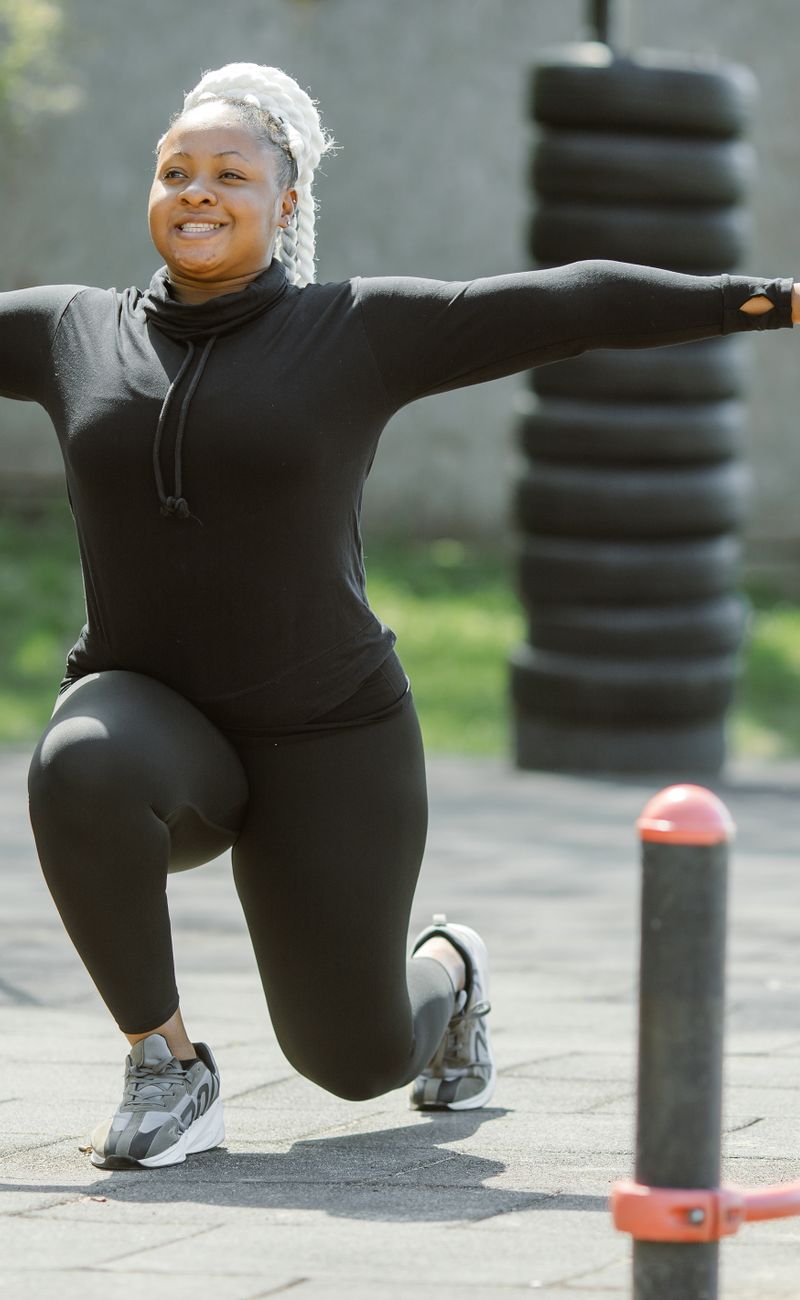
Bodyweight squats, pistol squats, and single-leg step-ups handle the lower body. A fallen log at the right height becomes a box for step-ups and box jumps. A steep hill becomes a squat depth gauge and a loading variable. Tree stumps of varying heights test your single-leg work from multiple angles. The ground beneath you is never perfectly flat, which means your stabilizers are working on every rep, unlike the stable platform of a leg press machine.
Dips are available on park benches, playground railings, and any low structure with parallel surfaces. Parallel bars in outdoor fitness areas handle this well. If nothing else exists, elevated tricep push-ups on the edge of a wall or bench will build the foundation.
Inverted rows using low tree branches or playground structures build horizontal pulling strength that complements the vertical pulling of pull-ups. These are critical for balanced upper body development and often the missing piece in bodyweight training programs that only focus on push and pull vertical patterns.
Planks, side planks, L-sits, and hanging knee raises handle core work. Tree branches become hanging stations for leg raises, windshield wipers, and front levers. A sturdy low branch lets you practice tucked front lever progressions or Australian pull-ups at various angles. The core training options outdoors are limited only by your creativity and willingness to explore the environment.
Progressive Overload Without Weights
Progressive overload is the mechanism by which strength adapts. You must create a stimulus that exceeds what your current capacity can handle, and then repeat that stimulus with incremental increases over time. In a gym, this is simple. You add weight to the bar. Outdoors, you have to be more creative, but the options are genuinely more varied than just adding plates to a barbell.
Volume increase is the most accessible form of outdoor progressive overload. Adding one set per week, increasing reps per set, or reducing rest intervals between sets all create progressive stimulus. A beginner might start with 3 sets of 8 push-ups. Three months later, they are doing 5 sets of 20 push-ups. That is a tripling of total work performed, and the strength adaptation is significant.
Load increase through elevation changes the leverage on every bodyweight exercise. If you can do 15 push-ups on flat ground, elevated push-ups on a park bench might drop you to 8 reps initially. That is overload through leverage, and it works the same muscle groups from a different angle. As you gain strength at that elevation, you move to higher surfaces until you are doing decline push-ups with feet elevated on a low wall, pushing your chest to failure in the 5 to 8 rep range.
Unilateral variations increase the load on each limb automatically. If you can do 20 push-ups with both hands, you cannot necessarily do 10 with each hand individually. The strength discrepancy between your dominant and non-dominant sides means unilateral work is naturally harder than bilateral work. Single-leg squats, single-arm push-ups, and single-leg hip thrusts are all progressions that overload without external weight.
Tempo manipulation adds time under tension and metabolic stress. A 3-1-3 tempo on a push-up means 3 seconds down, 1 second pause at the bottom, 3 seconds up. That is double the time under tension compared to a standard 2-second cadence, and it produces different adaptation. Slow eccentrics, pause reps, and isometric holds all create overload through time rather than external load.
Dynamic range increase is possible through skills work. A standard push-up covers a fixed range of motion. A handstand push-up covers a dramatically larger range while loading the same muscles with a higher percentage of body weight. The progression from floor push-ups to pike push-ups to wall handstand push-ups is a years-long journey that produces extraordinary shoulder and pressing strength.
Weighted vests, sandbags, and natural objects like rocks and logs add external load when you need it. A 20-pound rock held against your chest during squats or lunges adds real weight to a bodyweight movement. These are less predictable than gym equipment, which means your stabilizers and grip work harder to manage the load. A sandbag carried up a hill and then used for push-ups at the top is a full protocol that a gym cannot replicate.
The Outdoor Training Protocol
A structured outdoor bodyweight training week should incorporate three to four sessions of 45 to 75 minutes. The exact frequency depends on your recovery capacity, training history, and the physical demands of your daily life. If you are working physically demanding job, you may need to start with two sessions and build from there.
Structure each session around movement patterns rather than muscle groups. The push, pull, hinge, squat, and carry patterns cover everything your body needs to develop. A sample three-day structure looks like this: Day one handles push and hinge. Day two handles pull and squat. Day three handles carries and a full body circuit. This rotation ensures every major pattern gets trained twice per week while maintaining adequate recovery between sessions targeting the same muscle groups.
Warm up dynamically before every session. Five to ten minutes of joint rotations, body weight lunges, light, and movement preparation prevents injury and primes your nervous system for the work ahead. Walking to your training spot is not a warm up. Move with intention before you load your joints under your body weight in challenging positions.
The working portion of your session should follow a progressive structure. Start with the hardest skill you are training that day. If you are doing pull-ups, do those first when you are fresh. If you are working on pistol squats, attempt those before your legs are fatigued from other work. Structure your session so that each subsequent exercise is somewhat easier than the one before it, because your capacity decreases as the session progresses.
Rest between sets should be 60 to 120 seconds for strength work, 30 to 60 seconds for metabolic work. Outside, you do not have a clock in front of you, so use your phone timer or a basic watch. The natural environment is a distraction factory, and you need a structured rest protocol to stay on track.
Cool down with some light movement and a walk. Five minutes of easy walking and gentle stretching at the end of your session promotes recovery and prevents the stiffness that comes from hard training followed by sitting in a car or on a couch. If you have access to cold water, even a brief rinse after training reduces inflammation and accelerates recovery. No cold water available means you missed an opportunity, but you will recover anyway.
Training in Different Seasons and Conditions
Cold weather training is where the real adaptation happens. When the temperature drops, your body must work harder to maintain core temperature, which increases the metabolic demand of every exercise. Your stabilizers activate more aggressively to protect joints in the cold. Your breathing changes as cold air enters your lungs. This is not a reason to stay inside. This is the protocol.
Layer appropriately for cold outdoor training. You need enough insulation to prevent your muscles from stiffening, but not so much that you overheat and soak your clothing with sweat. Cotton is your enemy in cold conditions because it holds moisture and eliminates your insulation layer. Synthetic fabrics and wool manage moisture and retain insulation when wet. Start slightly cold. You will warm up within the first few minutes of movement.
Hot weather training requires hydration strategy and session timing. Morning and evening sessions avoid the peak heat of midday. Acclimatization happens over two to three weeks of consistent training in heat. You will sweat more efficiently, experience lower heart rate at the same workload, and recover faster between sessions. Accept the discomfort of hot training. It builds the kind of resilience that cold-weather training also provides.
Rain is not an obstacle. Wet surfaces change the grip dynamics of your training, which adds a balance and stability challenge that dry conditions do not provide. Your body gets stronger from training in varied conditions. The person who trains in the rain and cold develops more resilience than the person who only trains when the weather is comfortable.
Altitude training is the variable that most gym-based athletes never access. At elevation, the air is thinner, which means less oxygen available per breath. Training at elevation builds cardiovascular capacity that sea-level athletes cannot match. Hiking trails above 6,000 feet and doing your bodyweight routine at altitude for even two weeks produces adaptation that persists for months after returning to lower elevation. The work feels harder at altitude. The payoff comes when you return to sea level and find everything effortless.
Building Your Outdoor Training Sanctuary
The ideal outdoor training location has multiple surface types, overhead structures for hanging, elevated objects for step-ups and dips, and enough space for dynamic movement. A local park with a playground, some trees, and a few benches covers most of these requirements. Look for parks with monkey bars and parallel bars. Look for hills or stairs. Look for natural features like boulders and logs.
Your training location does not need to be beautiful. It needs to be functional. A muddy patch behind a rec center with a sturdy tree and a few benches is a better training location than a scenic overlook with nothing to hang from or step onto. Function first. Aesthetics are a bonus.
Carry minimal equipment in a small pack. A jump rope for conditioning, a suspension trainer for rows and assisted movements, a weighted vest or sandbag for loading, and a phone for timing. That is the complete kit. Everything else is weight that slows you down and gives you an excuse to skip training when you do not have it.
Consistency beats perfection every time. The person who trains four days per week in a park with a rusty pull-up bar gets stronger faster than the person who trains twice per week in a perfect gym environment but skips sessions when motivation wanes. Your outdoor training protocol is designed to fit into your life, not to require a specific setup that only exists in certain locations.
Start where you are. If you are currently doing nothing, begin with three days per week of basic push-ups, squats, and hanging from a tree branch for time. Build from there. If you are currently training in a gym, add one outdoor session per week and replace one gym session with an outdoor session. The transition does not need to be abrupt. It needs to be inevitable.
The gym will still be there when you need it. But you will not need it the way you think you do. Your body is capable of more than your gym membership has convinced you of. The outdoors has been waiting for you to find out.